Design Studio Review
Basement Studio Review 2026: Why Design Twitter Loves This Studio
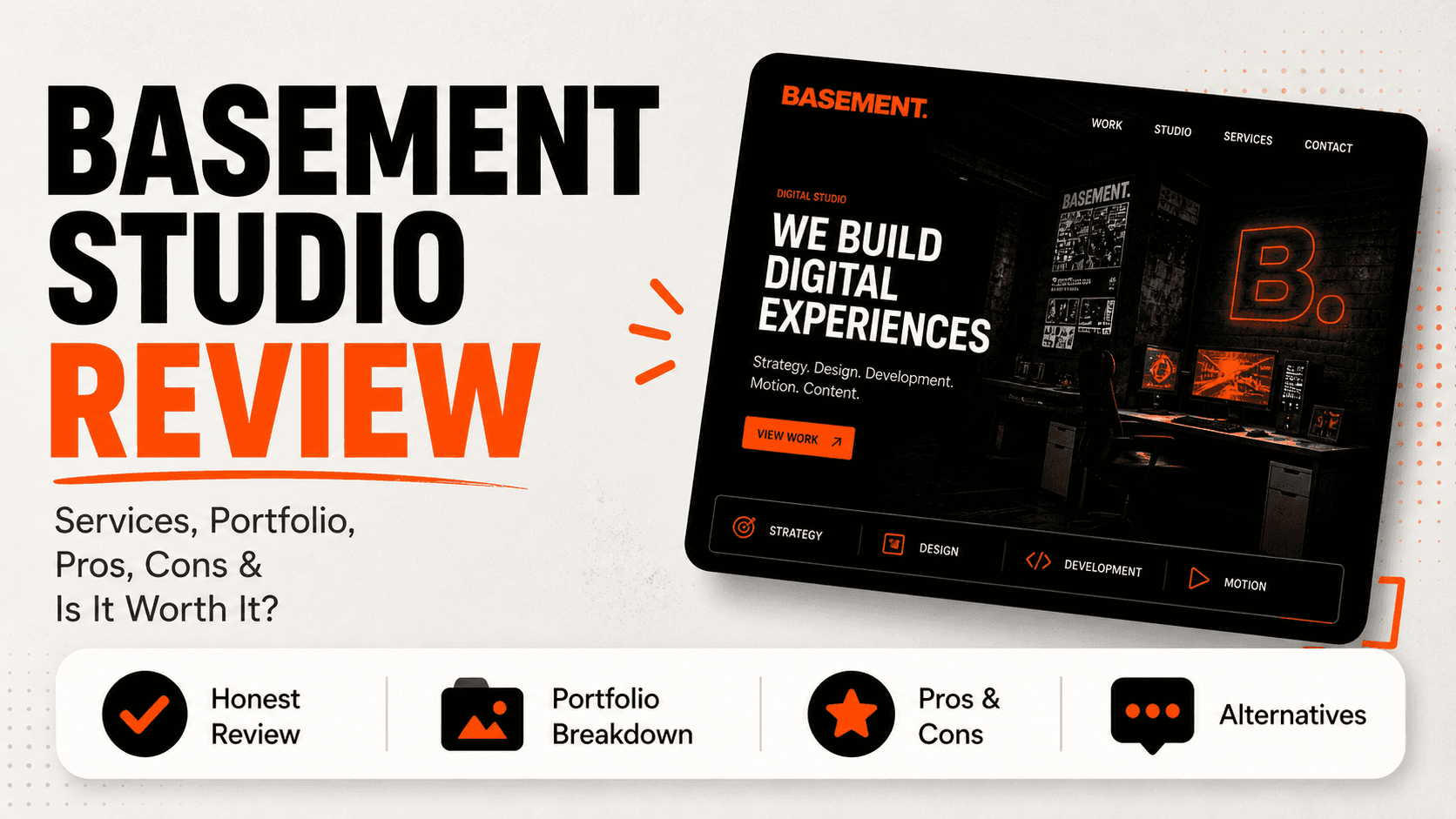
If you are searching for a basement studio review, you are probably not just looking for another agency profile.
Limited Monthly Offer
Unlimited Requests
Design + Development
Animations Included
Fixed Monthly Price
If you are searching for a basement studio review, you are probably not just looking for another agency profile.
You are probably wondering why this studio keeps showing up around startup design, tech launches, modern websites, and design Twitter.
That is exactly what I want to unpack in this article.
basement studio has become one of those studios people in the design and startup world seem to notice. Their work feels internet native. It has the kind of taste that fits well with modern tech companies, dev tools, AI startups, creator brands, and product-led companies that want to look sharp online.
It does not feel like old-school agency design.
It feels more like a studio that understands how modern startups want to show up: clear, bold, polished, slightly playful, and very aware of internet culture.
That is probably one reason basement studio became a favorite in design Twitter.
But hype is not enough reason to hire a studio.
If you are a founder or startup team, you still need to know the practical things: what they do, how much they may cost, whether they are legit, what kind of projects they are best for, and whether their design style actually supports business goals.
Hi I am Subarno, a designer and no-code developer working with founders, startups, and agencies on websites, landing pages, and product interfaces. I design in Figma and build with Framer, Webflow, and modern no-code tools. Because of that, I tend to look at studios from both angles: the visual quality and the practical product value.
So, when I look at a studio like basement studio, I am not only looking at whether the design is cool enough for Twitter. I am also looking at whether the work feels useful, scalable, clear, and valuable for the kind of company thinking about hiring them.
basement studio has a very strong point of view.
But is it the right point of view for your brand?
Let’s get into it.
Quick Verdict: Should You Hire Basement Studio?
basement studio is a strong option if you want modern startup branding, a high-quality website, product-led visual identity, launch assets, or an internet-native digital experience that feels current and memorable.
I would mostly recommend basement studio for funded startups, AI companies, dev tools, SaaS brands, creator-led businesses, tech companies, and teams that care about both taste and performance. Their own website says they partner with ambitious startups, scale-ups, and brands to unlock growth through creativity, design, and technology.
The biggest reason to hire basement studio is that they understand the modern tech/startup aesthetic very well. Their client list includes names like Vercel, Next.js, Linear, Cursor, Scale, Harvey, Baseten, Black Forest Labs, Speakeasy, Krea, Apollo GraphQL, Cal, Replicate, MrBeast, Daylight Computer, KidSuper Studios, General Catalyst, and more. That is a very strong signal if you are building in the tech or startup world.
But basement studio is probably not the right fit if you need a cheap website, a basic landing page, or a simple brand identity with a small budget.
Clutch list basement studio with a $10,000+ minimum project size, a $100–$149 hourly rate, 10–49 employees, a location in Mar del Plata, Argentina, and a founding year of 2018. Clutch also currently marks the profile as “not yet reviewed,” so buyers should not treat Clutch as a review source for client satisfaction yet.
So, my quick verdict is this:
Hire basement studio if you want internet-native branding, a polished tech website, or a digital experience that feels sharp enough for startup Twitter. Do not hire basement studio if you only need a cheap template site or a very basic landing page.
What Is Basement Studio?
basement studio is a digital studio and branding studio focused on websites, visual branding, IRL experience design, and marketing execution.
Their official website describes the studio as “a digital studio & branding powerhouse” that partners with ambitious startups, scale-ups, and brands through creativity, design, and technology.
That positioning is important.
basement studio is not just saying, “We design websites.” They are positioning themselves closer to a creative and technical partner for fast-moving companies. Their services page says they create digital experiences and brands that “inspire action, turn heads, and bring communities together” for companies that move fast, think big, and expect results.
The studio’s main capabilities are websites and features, visual branding, IRL experience design, and marketing execution. Their homepage also mentions product strategy, UX/UI design, engineering, 3D and motion design, visual identity, branding systems, space design, keynote design, digital and interactive work, omni-channel campaign content, growth experiments, and sales materials.
So, in simple terms, basement studio is not only a web design studio.
They are more like a modern internet brand studio.
They can help with how a company looks, how its website feels, how its product launch shows up, how its event looks, how its visual system works, and how its marketing assets support growth.
That makes them especially interesting for startups that live online. If you are building a dev tool, AI product, SaaS platform, creator brand, or design-forward tech company, basement studio’s style may feel much closer to your world than a traditional corporate agency.
Who Runs Basement Studio?
The clearest public names connected to basement studio leadership are Facundo Santana and José Rago.
A UX Tools episode describes Facundo Santana and José Rago as the people who run Basement Studio, and says the team is around 35 people in Argentina working with brands like Vercel, MrBeast, and KidSuper. The same episode also talks about the studio’s quality process, R&D lab, open-source projects, and Basement Ventures.
This is useful because basement studio feels very founder-led from the outside. It does not feel like a faceless agency. It feels like a studio with a strong internal culture, strong opinions, and a clear taste level.
That matters a lot when you are hiring a design studio.
For a studio like basement studio, you are not only buying design files. You are buying taste. You are buying judgment. You are buying the internal standard that decides whether something is good enough to ship.
One interesting detail from the UX Tools episode is that it describes how “30 people pile into a single Slack channel before anything ships.” That gives a sense of the studio’s internal review culture and how seriously they appear to take craft.
Of course, as a buyer, you should still ask who will actually work on your project. Founder-led reputation is great, but the day-to-day project team matters too.
Basement Studio Pricing: How Much Does Basement Studio Cost?
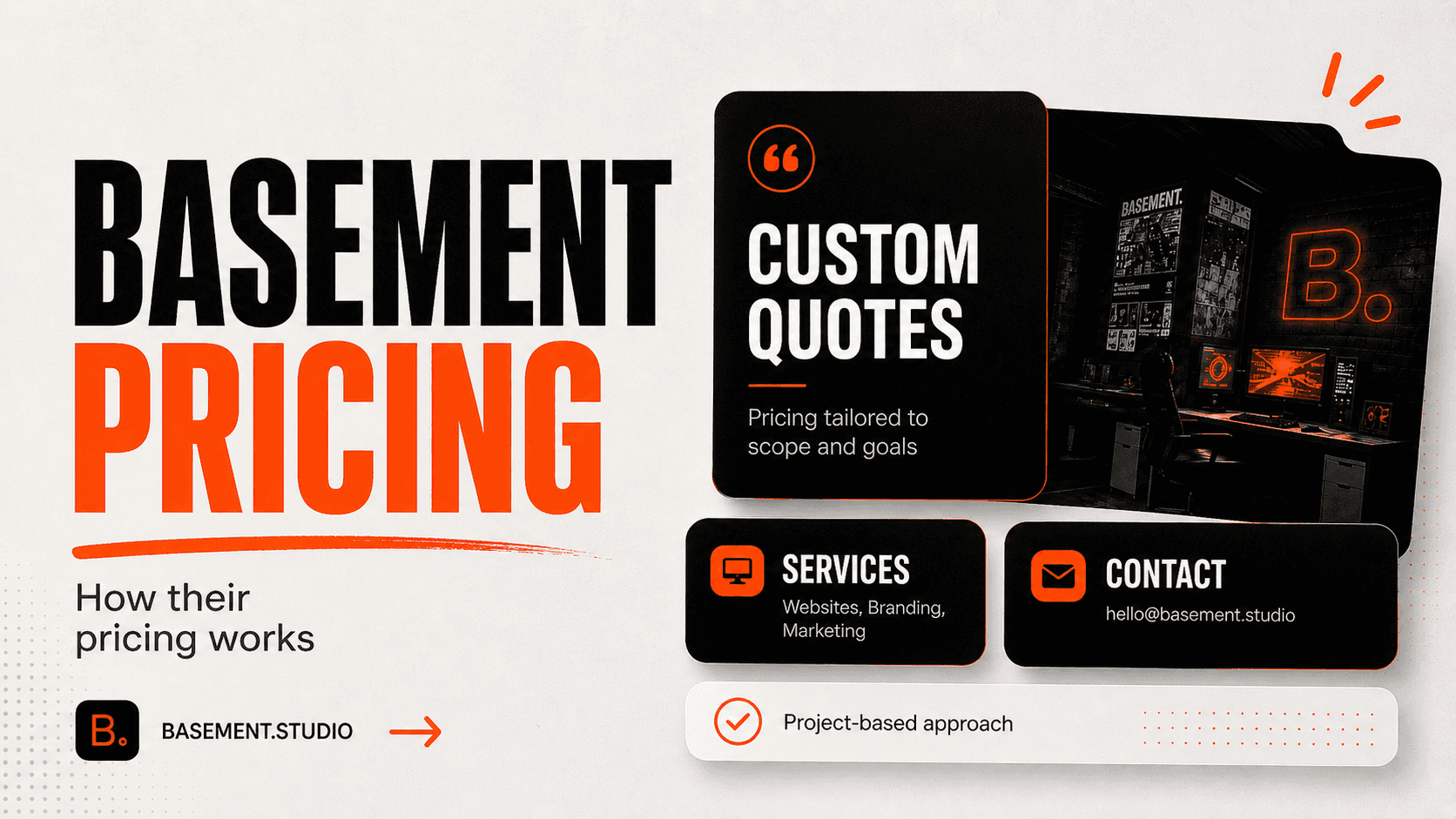
basement studio does not appear to publish a simple fixed pricing page on its main website.
That means if you are seriously considering hiring them, you will likely need to contact the studio and request a custom quote based on your scope.
However, public pricing signals give us a useful range.
Clutch lists basement studio with a $10,000+ minimum project size and a $100–$149 hourly rate. It also lists the company as having 10–49 employees, being located in Mar del Plata, Argentina, and being founded in 2018.
So, what does this mean in normal founder language?
basement studio is not a cheap studio.
If you are looking for a $1,000 landing page, this is probably not the right place. If you are looking for a $2,000 logo and a basic one-page website, they may also be more advanced than what you need.
But if you are preparing for a serious launch, rebrand, fundraising moment, product release, or category-defining website, then a $10,000+ starting point may be easier to understand.
Their work appears to be aimed at companies that care about the brand and website as a serious business asset. Their services page says they work from early-stage disruptors to multi-billion-dollar category leaders and create digital ecosystems that “captivate, convert, and scale.”
My honest pricing take is this:
If your website is just an online brochure, basement studio may be too expensive.
If your website is part of your product launch, investor story, developer community, brand identity, or category positioning, basement studio may be worth considering.
What Do You Get With Basement Studio?
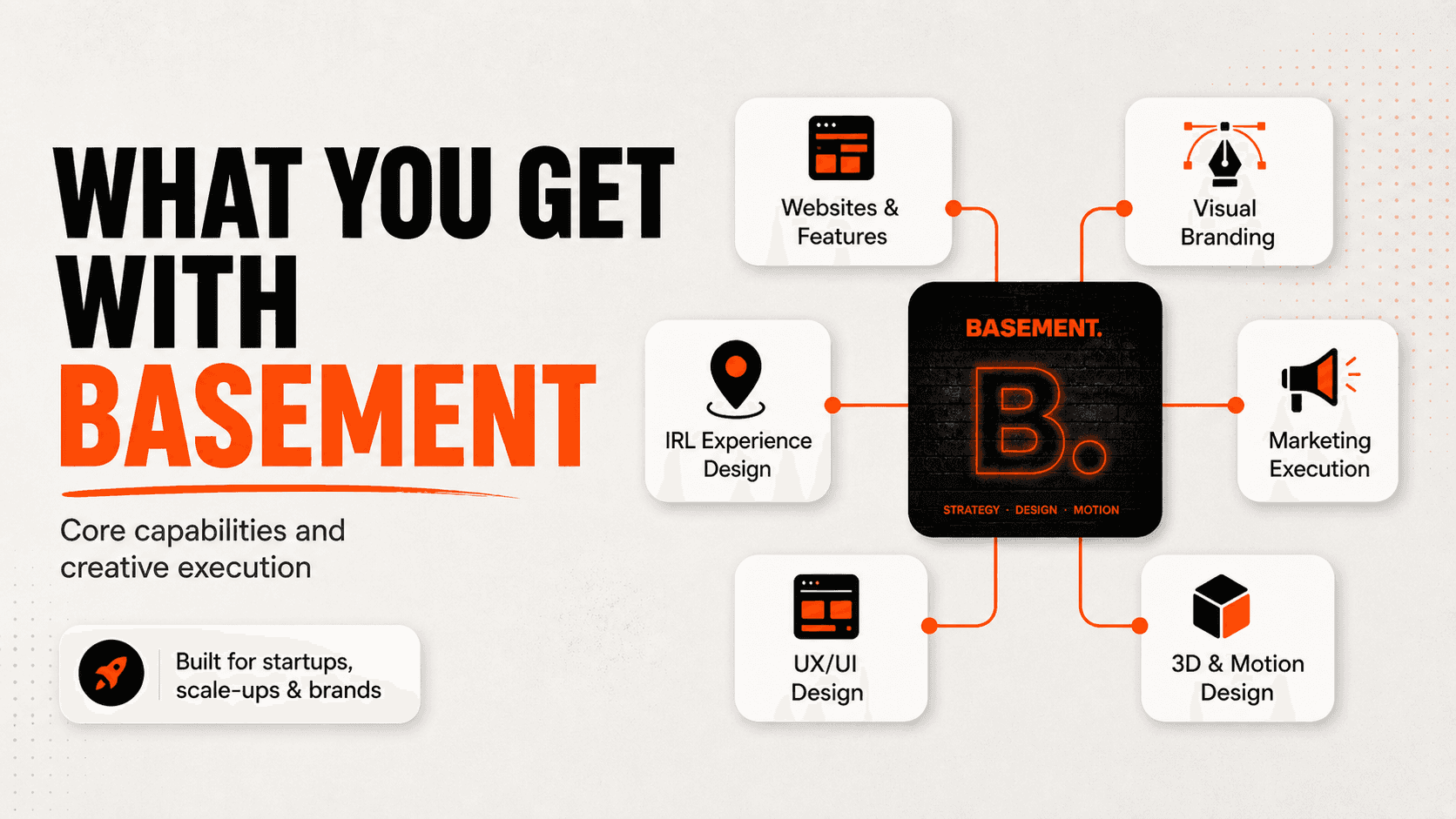
What you get depends on the scope, but basement studio’s public service pages give a clear idea of the kind of work they do.
For websites and features, they say they work on everything from pre-launch landing pages to complete website redesigns, creating digital experiences that capture attention and inspire action.
For visual branding, they say they create scalable brand systems, from lean identities for early startups to comprehensive brand platforms for industry leaders.
For IRL experience design, they work on annual summits, local meetups, and in-person event experiences. That is especially interesting because a lot of digital studios only work on websites, while basement studio also thinks about how brands show up offline.
For marketing execution, they say they collaborate with marketing teams on assets that drive awareness, demand, and conversions. Their homepage lists omni-channel campaign content, growth experiments, and sales materials under this area.
So, a typical basement studio engagement could include product strategy, UX/UI design, website design, engineering, visual identity, branding systems, 3D and motion design, keynote design, launch assets, campaign content, and sales materials.
That is a wide range.
And it explains why they are popular with companies like Vercel, Next.js, Linear, Cursor, Harvey, and other tech-native brands. Those companies do not just need “a pretty website.” They need a visual system, launch energy, product clarity, and a digital experience that speaks to developers, founders, and early adopters.
What Is Basement Studio’s Biggest Strengths?
The biggest strength of basement studio is that they understand internet-native taste.
Their work feels built for the current startup and tech world. It does not feel like an old corporate design agency trying to force a modern style. It feels like a studio that understands the visual language of launch pages, developer tools, AI products, creative brands, digital communities, and fast-moving product companies.
The second big strength is that they combine design with technical execution.
Their LinkedIn page lists specialties such as user experience, design, React, user interface, web development, UX design, product design, UI design, and Next.js.
That matters because modern startup websites are not always simple. Some need advanced frontend work, motion, 3D, performance, launch mechanics, interactive features, or developer-focused polish. basement studio seems built for that kind of work.
The third strength is public proof.
Their homepage lists major clients and collaborators, including Vercel, Next.js, Linear, Cursor, MrBeast, Daylight Computer, KidSuper Studios, General Catalyst, and more.
Their Awwwards profile also shows strong recognition, including 20 works, 11 Site of the Day awards, and 19 Honorable Mentions.
The fourth strength is performance language.
This is important because some beautiful studios only talk about aesthetics. basement studio talks about performance, conversion, demand, growth experiments, sales materials, and digital experiences that convert and scale. Their services page uses language around action, results, awareness, demand, and conversions, not just beauty.
That does not automatically mean every project will be conversion-optimized like a CRO agency. But it does show that the studio is at least thinking about business outcomes, not only visuals.
My Honest Design Opinion
My honest design opinion is that basement studio is one of the clearest examples of a studio that understands the modern startup internet.
There are many agencies that can make a website look clean. But basement studio has a stronger cultural signal.
Their work feels like it belongs next to Vercel, Next.js, Linear, Cursor, and the kind of brands people discuss on X/Twitter. That matters because the audience for many tech products is not a traditional corporate buyer. It is often founders, engineers, designers, operators, investors, and early adopters.
Those people notice taste.
They notice if your website feels generic. They notice if your typography feels lazy. They notice if your launch page feels like every other SaaS template. They notice if the interaction design feels weak.
This is probably one reason basement studio became a favorite in design Twitter. Their work gives people something to talk about. It has craft, personality, and enough technical edge to feel exciting.
But I would also be careful not to turn that into blind praise.
A studio being loved by designers does not automatically mean it is the right studio for every business.
If you need a straightforward conversion page, sometimes simple is better. If your audience is not design-sensitive, you may not need the full basement studio level of craft. If your budget is limited, you may get better ROI from a smaller team that focuses on copy, structure, and speed.
But if your brand needs to feel like it belongs in the top layer of modern tech culture, basement studio makes a lot of sense.
Pros of Hiring Basement Studio
The first pro is taste.
basement studio has a very clear design point of view. Their work feels sharp, modern, and internet native. That is valuable if you are building in a category where brand perception matters.
The second pro is their client list.
Having public work or trust signals connected to Vercel, Next.js, Linear, Cursor, Harvey, MrBeast, KidSuper, Daylight Computer, General Catalyst, and others is a strong sign that the studio understands high-visibility digital work.
The third pro is technical credibility.
Their work is not only visual. Public sources connect the studio to React, Next.js, web development, engineering, frontend experiences, 3D, motion, and interactive design.
The fourth pro is awards.
basement studio’s Awwwards profile shows 11 Site of the Day awards and 19 Honorable Mentions, while their services page lists a long awards section including Awwwards, FWA, and Webby recognition.
The fifth pro is that they seem to understand launch moments.
Their Vercel Ship case study describes a full-scale collaboration across website, strategy, design, technology, projection mapping, stage design, creative direction, live demos, product reveals, and event collateral.
That is not normal “web agency” work. That is brand experience work.
Cons of Hiring Basement Studio
The first con is price.
Public pricing on Clutch starts at $10,000+, with an hourly rate of $100–$149. That may be completely reasonable for the quality and client type, but it is still too high for many early founders.
The second con is that there are limited public client reviews on common review platforms.
Clutch currently lists basement studio as “not yet reviewed.” So, while the studio has strong public proof through clients, awards, and case studies, buyers do not have the same depth of verified Clutch review data that some other agencies have.
The third con is that the studio may be overkill for simple projects.
If you only need a basic one-page website, a simple Webflow build, or a quick MVP landing page, basement studio may be more studio than you need.
The fourth con is that high-craft work can take more alignment.
When a studio works at this level, you should expect more creative direction, more review, and more strategic thinking. That is great if you want a serious brand experience. But if you want something fast and simple, it might feel like too much.
The fifth con is that you should clarify conversion scope.
basement studio talks about performance, conversions, growth experiments, and marketing execution, which is good. But if your main goal is paid-ad CRO, A/B testing, heatmaps, and analytics-led iteration, you should ask exactly how they handle those things before hiring.
Who Should Hire Basement Studio?
You should consider hiring basement studio if you are building a startup, tech company, AI product, dev tool, SaaS brand, creator-led company, or product that needs to look sharp in front of an internet-native audience.
You should also consider them if your launch matters.
For example, if you are announcing a new product, raising funding, launching a major feature, hosting an event, or trying to reposition your brand, basement studio’s ability to connect website, identity, motion, engineering, and campaign assets can be valuable.
You should also consider basement studio if your audience is design sensitive.
If your users include designers, developers, founders, investors, creators, or tech operators, then visual quality can become part of trust. A generic website may make your product feel weaker than it is. A stronger digital experience can help you feel more credible.
basement studio is also a good fit if you want a studio that understands modern tech culture. Their work with Vercel Ship, Daylight, MrBeast, and other internet-native brands shows that they are comfortable with high-visibility projects that need both creative energy and technical execution.
Who Should Not Hire Basement Studio?
You probably should not hire basement studio if your budget is very small.
You should also avoid them if you only need a basic landing page, simple brochure site, or quick template build.
If you are still validating an idea and do not know whether the product has demand yet, you may not need a premium studio. You may need a lean page, strong copy, and a fast test.
basement studio may also not be the best fit if your main need is only SEO content, paid media management, or CRO experimentation. They do mention marketing execution and growth experiments, but their strongest public identity is still branding, websites, visual identity, engineering, and high-craft digital experiences.
You should also think twice if your audience is very conservative and does not value internet-native design. basement.studio has a strong style. That is a benefit for the right brand, but it may not fit every industry.
Basement Studio Alternatives
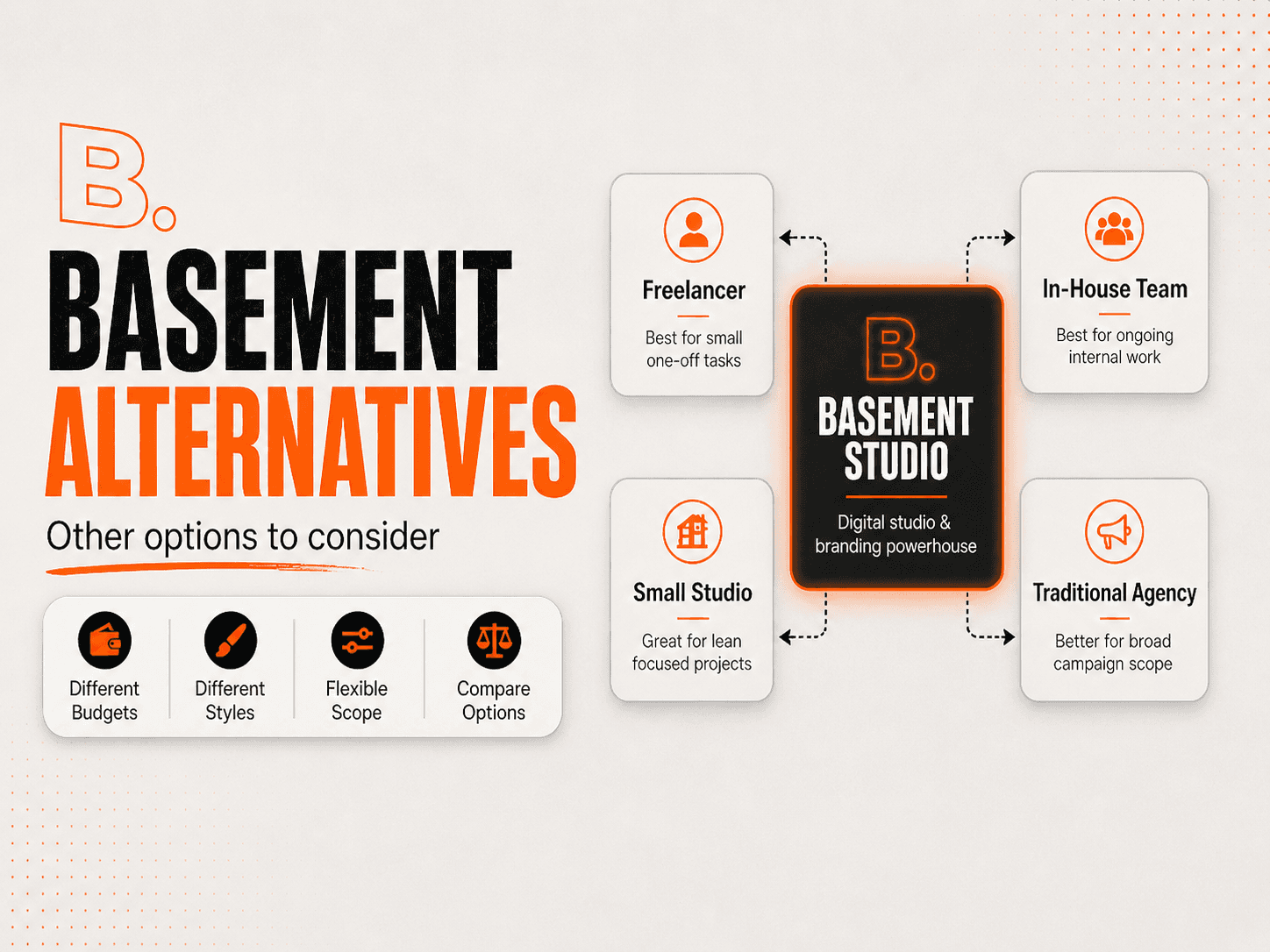
If basement studio feels too expensive or too advanced for your current stage, there are a few alternatives worth considering.
A freelance brand designer may be enough if you only need a basic visual identity, logo direction, or early startup look and feel.
A Webflow specialist may be better if you already have your brand and copy ready and only need someone to build a clean marketing site quickly.
A Framer specialist may be a good fit if you want a fast, interactive startup website with a smaller scope.
A CRO-focused landing page agency may be better if your main goal is paid traffic conversion, A/B testing, heatmaps, funnel strategy, and analytics.
A traditional branding agency may be better if you need deep brand strategy, positioning, messaging, and a full identity system before touching the website.
An in-house designer may make sense if you need ongoing design support every week across product, marketing, sales, and brand.
And if your budget is lower than basement.studio but you still want clean, conversion-focused design, you can also check our Work.
Landing Page Design
From $250–$500/page
Figma design for landing pages, service pages, and campaign pages.
Features include:
Custom Figma landing page design
Clear section structure and page flow
Responsive design thinking for desktop and mobile
Conversion-focused layout and visual hierarchy
Final Figma file included
Framer / Webflow Development
From $200–$300/page
Responsive build, basic SEO setup, CMS when needed, clean handoff.
Features include:
Framer or Webflow page development
Responsive setup for desktop, tablet, and mobile
Smooth interactions and basic animations
CMS setup when needed
Basic SEO structure and clean page setup
Final handoff after launch
Design + Build Package
From $700+
Best for people who want the page designed and developed together.
Features include:
Full landing page design in Figma
Framer or Webflow development included
Content structure and section planning
Responsive design and development
Basic SEO setup before launch
End-to-end support from idea to live website
Pitch Deck Design
From $30/slide
For startup decks, sales decks, and client-facing presentations.
Pricing breakdown:
Custom pitch deck slide design
Clean visual layout and storytelling
Investor, sales, or client presentation format
Charts, icons, and content formatting
Brand-consistent design direction
Editable final deck file
Small Updates
From $20/update
For existing clients who need minor design or website changes.
Pricing breakdown:
Small website text or image updates
Minor Figma design changes
Section spacing and layout adjustments
Simple Framer or Webflow edits
Quick turnaround for existing clients
I run a design and web studio where we help startups, founders, and agencies with:
Landing page design
Website design
Figma UI design
Webflow development
Framer development
White-label design support for agencies
The difference is that we are usually a better fit for people who want good design but may not be ready to spend $10,000+ on a premium studio engagement.
So, if basement studio feels like the right level of taste, but the pricing is outside your current budget, you can look at smaller studios like ours as an alternative.
Of course, this does not mean basement.studio is bad. It just means every business has a different budget, timeline, and design need.
Final Verdict: Is Basement Studio Worth It?
basement studio is worth hiring if you want modern startup branding, a high-quality website, internet-native visual identity, launch experience, or digital system that feels sharp enough for the current tech world.
The studio has a strong public presence, a clear positioning, major client signals, strong awards proof, and a style that makes sense for startups, tech brands, creator businesses, AI companies, dev tools, and culture-aware digital products. Their official site lists trusted names like Vercel, Next.js, Linear, Cursor, Scale, Harvey, MrBeast, Daylight Computer, KidSuper Studios, General Catalyst, and others, which is a very strong signal for this type of work.
But basement.studio is not for every founder.
If you need something cheap, simple, or extremely fast, you should compare other options. If your main concern is CRO testing, paid ads, or SEO content, you should ask deeper questions about how much of that is included in the scope.
My final recommendation is simple:
Hire basement studio if you want your startup, tech company, or internet-native brand to look like it belongs at the top of the design conversation. Compare alternatives if your budget is smaller or your project only needs basic execution.