Design Studio Review
MetaLab Review 2026: Pricing, Services, Pros, Cons & Is It Worth Hiring?
If you are searching for a MetaLab review, you are probably not trying to find a flashy web design studio.
Limited Monthly Offer
Unlimited Requests
Design + Development
Animations Included
Fixed Monthly Price
If you are searching for a MetaLab review, you are probably not trying to find a flashy web design studio.
You are probably looking for something more serious:
“Is MetaLab the right product design partner for my SaaS, app, or startup interface?”
That is the question I want to answer in this article.
MetaLab has a very different kind of reputation from motion-heavy or cinematic design studios. They are known more for clean product interfaces, strong UX, software design, and digital products that feel simple even when the underlying product is complex.
That kind of design is easy to underestimate.
A clean SaaS interface may not always look as exciting in a screenshot as a 3D animated website. But when you are building a real product, clarity matters. Onboarding matters. Navigation matters. Empty states matter. Dashboards matter. Design systems matter. The small decisions inside the product can affect how people understand, trust, and continue using it.
That is where MetaLab’s reputation becomes interesting.
Hi, I am Subarno, a designer and no-code developer working with founders, startups, and agencies on websites, landing pages, and product interfaces. I design in Figma and build with Framer, Webflow, and modern no-code tools. Because of that, I tend to look at studios from both angles: the visual quality and the practical product value.
So in this MetaLab review, I am not just asking whether MetaLab has a strong portfolio.
I am asking whether they make sense for a founder or product team that needs better UX, cleaner interfaces, stronger product thinking, and a design partner that can help turn complexity into something users actually understand.
MetaLab has a lot of product design credibility.
But is it worth the premium?
Let’s break it down.
Quick Verdict: Should You Hire MetaLab?
MetaLab is a strong option if you are building a serious digital product and need product strategy, UX research, UI design, interface systems, product design, or software engineering support.
I would mostly recommend MetaLab for funded startups, SaaS companies, AI products, fintech companies, consumer apps, marketplaces, productivity tools, and product teams that need a clean, scalable interface rather than a trendy one-page marketing site.
The biggest reason to hire MetaLab is credibility. Their public positioning is very clear: they make interfaces. Their official website says they have helped companies design, build, and ship products since 2006, and their work page shows projects across product design, engineering, web apps, mobile apps, brand, UX research, strategy, and websites.
But MetaLab is probably not the right studio if you need a cheap landing page, a basic website, or a simple design task with a small budget.
Clutch lists MetaLab as “not yet reviewed,” but still shows useful company information: $100,000+ minimum project size, undisclosed hourly rate, 50–249 employees, locations in Vancouver and Victoria, and a founding year of 2006. DesignRush lists MetaLab with 100–249 employees, a $50,000+ minimum budget, an “Inquire” hourly rate, and a founding year of 2006.
So, my quick verdict is this:
Hire MetaLab if you are building a serious software product and need a top-level product design partner. Do not hire MetaLab if you only need a low-cost website, a quick MVP landing page, or a small design task.
What Is MetaLab?
MetaLab is a Canadian product design and interface design studio focused on building digital products, software interfaces, mobile apps, web apps, product systems, and user experiences.
The studio’s official website opens with a very simple line: “We make interfaces.” That is a good summary of what MetaLab is known for. They are not trying to be a general marketing agency. They are much more focused on product design, UX, interfaces, and the craft of digital products.
On LinkedIn, MetaLab lists specialties including interface design, iOS design, web development, strategy consulting, product design, UX research, mobile development, app design, app development, UX design, UI design, brand, UX testing, design systems, frontend development, backend development, product management, product strategy, product vision, user engagement, user retention, engineering, and design.
That list tells you a lot.
MetaLab is not just designing pretty screens. They can support product thinking, design systems, UX research, product strategy, and engineering. That makes them a better fit for companies that need to build or improve a real product, not just refresh a homepage.
Their work page also backs this up. MetaLab shows projects involving product design, web design, engineering, brand, UX research, product strategy, iOS apps, web apps, mobile apps, design systems, and product vision. The examples include work for companies and products like Notarize, Upwork, Ro, Qatalog, Hinge Health, Pitch, The Yes, Headspace, TED, National Geographic, Walmart, and others.
In simple terms, MetaLab is a product design studio for companies that care about software quality.
They are especially relevant if your product has a lot of user flows, dashboards, onboarding screens, mobile interfaces, design system needs, or complex product decisions that need to feel simple.
Who Runs MetaLab?
MetaLab was founded by Andrew Wilkinson in 2006. Andrew Wilkinson’s LinkedIn profile lists him as Founder + Chairman of MetaLab, and Tiny’s investor site also says Wilkinson founded MetaLab before co-founding Tiny.
The current CEO connected to MetaLab is Luke Des Cotes. Public speaker bios and podcast pages describe Luke Des Cotes as CEO of Metalab, and LinkedIn-related sources also identify him as MetaLab’s CEO.
Sara Vienna is also publicly connected to MetaLab’s leadership as Chief Design Officer. A LinkedIn post from Sara announced her promotion to Chief Design Officer at Metalab, and MetaLab’s LinkedIn page lists her among employees.
This matters because MetaLab’s reputation is not just based on one viral project. It has been built over many years through leadership, design culture, and repeated work on serious products.
For a product design studio, leadership and internal taste matter a lot.
You are not just buying screens. You are buying judgment. You are buying the ability to simplify complex flows. You are buying taste, research, product thinking, and the confidence to say what should not be built.
That is where MetaLab’s long history gives them credibility.
MetaLab Pricing: How Much Does MetaLab Cost?
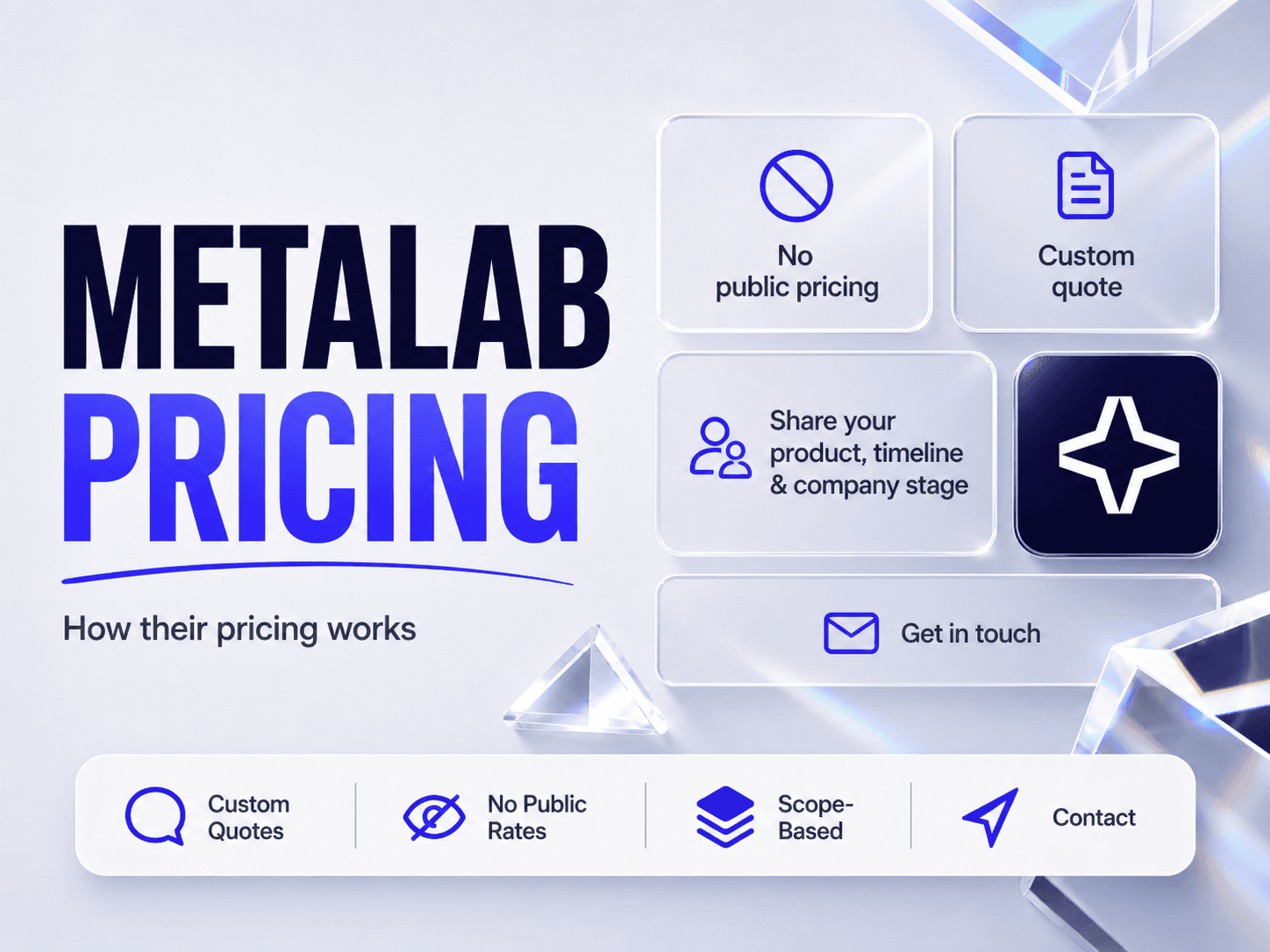
MetaLab does not appear to publish a simple fixed pricing page on its main website.
So if you are seriously considering hiring them, you should expect to contact the studio and get a custom quote based on project scope, timeline, team size, and complexity.
But public pricing signals are available.
Clutch lists MetaLab with a $100,000+ minimum project size and an undisclosed hourly rate. It also lists the company as having 50–249 employees, with locations in Vancouver and Victoria, and a founding year of 2006.
DesignRush lists MetaLab with a $50,000+ minimum budget, 100–249 employees, an “Inquire” hourly rate, and a founding year of 2006.
So what does this mean in normal founder language?
MetaLab is a premium studio.
This is probably not the right place if you have a $3,000 website budget or need a quick one-page landing page. MetaLab is better suited for serious product design engagements where the design system, UX, interface quality, and product decisions can have a major business impact.
If you are a funded startup building a product that will be used by thousands or millions of people, a high-budget design engagement can make sense. If your product is the business, then product design is not decoration. It is part of the core experience.
But if you are still validating an idea, you may not need MetaLab yet. You may need a leaner design partner, a smaller studio, a freelancer, or a faster landing page build.
My honest pricing take is this:
MetaLab is worth considering when the product experience is important enough to justify a premium investment. If your product is still early, simple, or unproven, MetaLab may be more than you need right now.
What Do You Get With MetaLab?
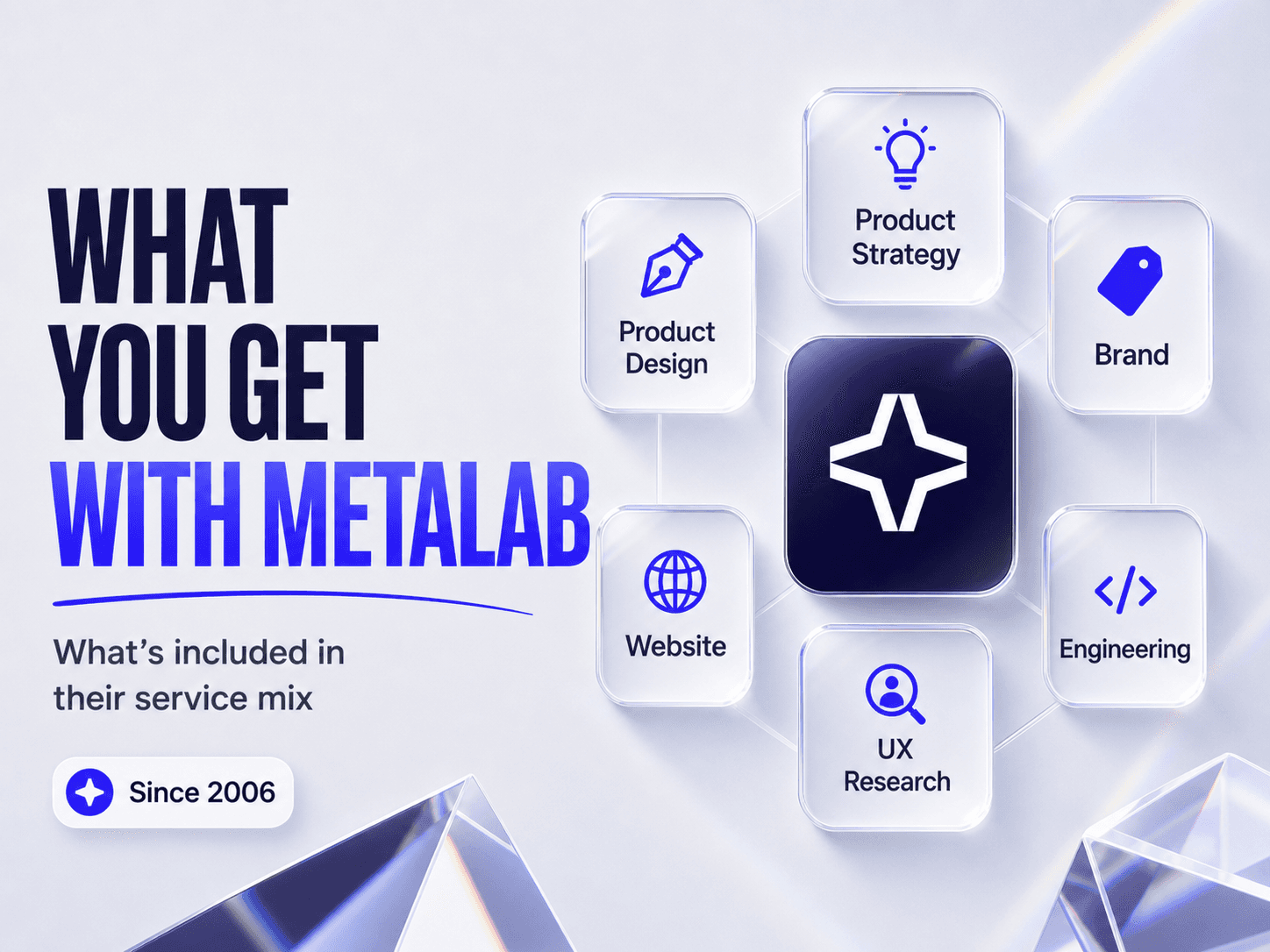
What you get with MetaLab depends on the engagement, but based on their public profiles and work examples, the studio can support product strategy, UX research, product design, interface design, design systems, web and mobile app design, branding, engineering, and product development.
DesignRush describes MetaLab’s core services as product strategy and research, concepting and prototyping, design and user interface, engineering and build, and scale and evolve. It says MetaLab invests in product thinking, market identification, user research, competitive analysis, positioning, prototypes, MVPs, interface design, and scalable engineering.
MetaLab’s work page also shows that their projects are not all the same. Some are product design projects. Some include engineering. Some include UX research. Some include brand. Some include strategy. Some include websites, mobile apps, web apps, and full product systems.
So, if you hire MetaLab, you may get support with product vision, UX research, product strategy, user flows, wireframes, prototypes, interface design, design systems, mobile app design, web app design, brand direction, frontend development, backend development, and ongoing product iteration.
The biggest thing you are probably getting is product clarity.
MetaLab’s value is not only that they can make software look good. Their bigger value is that they can help make a product feel understandable, usable, and polished.
That matters a lot for SaaS companies.
A SaaS interface can be powerful but confusing. It can have too many settings, too many flows, too many dashboards, and too much friction. A strong product design studio can help simplify the experience so users understand what to do next.
That is where MetaLab’s clean interface reputation becomes useful.
What Are MetaLab’s Biggest Strengths?
MetaLab’s biggest strength is product design credibility.
A lot of studios say they do product design, but MetaLab has a long track record around product interfaces. Its official site says the studio has helped companies design, build, and ship products since 2006, and its Clutch profile copy says the team is behind interfaces that billions of people click, tap, pinch, and zoom every day.
The second strength is clean interface design.
MetaLab’s best-known style is not loud for the sake of being loud. It is usually clean, focused, and product-first. That is one reason the studio is often associated with SaaS and software products. A clean interface is not just about looking minimal. It is about reducing friction and making the product easier to understand.
The third strength is serious client and product history.
MetaLab’s own work page shows projects across companies like Notarize, Upwork, Ro, Pitch, The Yes, Hinge Health, Headspace, TED, National Geographic, Walmart, and more. Awwwards also describes MetaLab as having shaped the internet through product design and development, mentioning Slack, Uber, and Midjourney in its case study of Metalab.com.
The fourth strength is that MetaLab can support both design and engineering.
This matters because product design does not stop at Figma. If the engineering is weak, the interface can fall apart in the real product. MetaLab publicly lists frontend development, backend development, full stack engineering, mobile development, app development, and engineering among its specialties.
The fifth strength is product focus.
In its Awwwards case study, MetaLab said that while many competitors have expanded their services, the studio remains “singularly focused on product.” It also said the goal for the website redesign was to make the site feel more like a native product than a website.
That is a very important point.
MetaLab is not trying to be everything to everyone. Their strongest lane is product.
My Honest Design Opinion
My honest design opinion is that MetaLab is one of the best examples of a studio where the work looks simple because the thinking is strong.
That kind of design is easy to underestimate.
Some studios impress you instantly with animation, 3D, and wild visuals. MetaLab’s work is usually more restrained. It is clean. It is structured. It feels like a product you can actually use.
For SaaS and product companies, that can be more valuable than a flashy website.
If you are building a dashboard, marketplace, mobile app, productivity tool, fintech product, AI workflow, or enterprise platform, users do not only care if the product looks cool. They care if they can understand it. They care if it feels fast. They care if the flows make sense. They care if the interface gives them confidence.
That is where MetaLab’s style makes sense.
I would not hire MetaLab just because I want a beautiful homepage. I would hire MetaLab if the actual product experience matters.
For example, if you have a SaaS product with a messy onboarding flow, confusing dashboard, weak design system, or unclear product story, MetaLab could be a strong fit.
But if you only need a small marketing website, I would probably look elsewhere.
MetaLab feels like a serious product design partner, not a budget-friendly design vendor.
Pros of Hiring MetaLab
The first pro is credibility.
MetaLab has been around since 2006 and has built a name around product design and interfaces. That kind of longevity is rare in the design agency world.
The second pro is product focus.
MetaLab’s own case study says the studio remains singularly focused on product. That is exactly what many SaaS and startup teams need.
The third pro is the quality of public work.
Their work page shows projects across software, mobile apps, web apps, UX research, product strategy, branding, engineering, and design systems. This makes them a strong fit for companies that need more than surface-level UI.
The fourth pro is that MetaLab can support design and engineering.
This is useful if you need the thinking, design, and build to stay connected. Their LinkedIn specialties include frontend development, backend development, full stack engineering, mobile development, app development, product strategy, and design systems.
The fifth pro is that they are especially strong for SaaS and interface-heavy products.
If your product lives inside screens, dashboards, workflows, lists, settings, onboarding, and repeat user actions, MetaLab’s product-first style is very relevant.
The sixth pro is that they are not just trend-driven.
MetaLab’s work usually feels clean and durable. That can be better for serious software companies than chasing whatever design trend is popular this month.
Cons of Hiring MetaLab
The first con is price.
Public pricing signals suggest MetaLab is expensive. Clutch lists a $100,000+ minimum project size, while DesignRush lists a $50,000+ minimum budget.
The second con is that MetaLab may be overkill for small projects.
If you only need a landing page, a basic website, or a small Figma cleanup, you probably do not need a studio at this level.
The third con is limited public review depth on common buyer platforms.
Clutch currently lists MetaLab as not yet reviewed, so buyers do not have the same Clutch review history that they might find for some other agencies. That does not mean MetaLab is not credible. It just means their reputation is driven more by portfolio, client history, and industry reputation than by public review volume.
The fourth con is that MetaLab may not be the right fit if you want a loud, highly animated brand experience.
MetaLab can design websites and brands, but its strongest public identity is product and interfaces. If you mainly want cinematic 3D, visual effects, and motion-heavy storytelling, another studio may be a better fit.
The fifth con is that they may not be ideal for early validation.
If you have not proven the problem yet, you may not want to spend premium agency money on product design. You may need to test the idea with a simpler prototype first.
Who Should Hire MetaLab?
You should consider hiring MetaLab if you are building a serious SaaS product, web app, mobile app, marketplace, fintech platform, AI product, productivity tool, healthcare product, or enterprise software experience.
MetaLab is a good fit if your product has complex user flows that need to become simple.
They are also a good fit if your company has already found traction but the product experience now feels messy, dated, or hard to scale. Their services and public work suggest they can help with product strategy, UX research, interface design, design systems, engineering, and product evolution.
You should also consider MetaLab if your interface is part of your competitive advantage.
For some products, design is not just decoration. It is the thing that makes people choose you over a competitor. If your market is crowded and product experience is one of your moats, hiring a studio like MetaLab can make sense.
MetaLab may also be a strong fit if you need a polished investor-facing product, a better onboarding flow, a cleaner dashboard, a scalable design system, or a product redesign that helps the company feel more mature.
Who Should Not Hire MetaLab?
You probably should not hire MetaLab if your budget is small.
You should also avoid MetaLab if you only need a simple marketing website, a basic landing page, a quick Webflow build, or a simple brand refresh.
If you are still in the early idea stage, MetaLab may be too expensive. You may be better off with a lean prototype, a freelancer, a smaller studio, or a quick MVP design.
MetaLab may also not be the best fit if your main need is content marketing, SEO writing, paid ads, or conversion-rate optimization. They are a product design studio, not a pure growth marketing agency.
You should also think carefully before hiring MetaLab if your project is mostly visual branding and not product-related. They can do brand work, but their strongest public reputation is still interface and product design.
MetaLab Alternatives
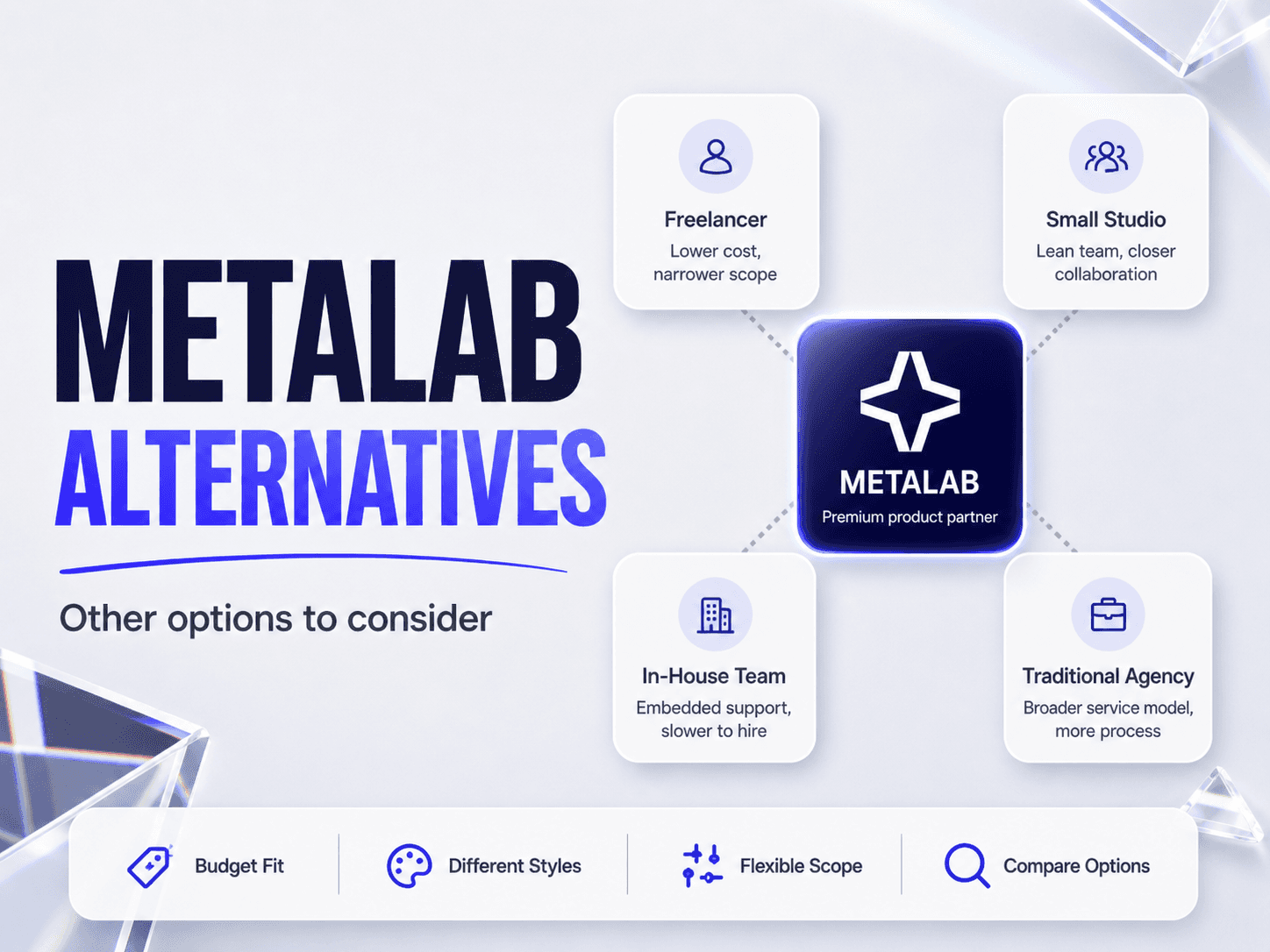
If MetaLab feels too expensive or too product-heavy for your current stage, there are a few alternatives worth considering.
A freelance product designer may be enough if you only need a few screens, a prototype, or a small UX cleanup.
A smaller product design studio may be better if you want product thinking but do not have a MetaLab-level budget.
A Webflow specialist may be a better fit if your main need is a marketing website, not a full product experience.
A Framer specialist may be useful if you want a clean, modern startup landing page with a faster launch timeline.
A branding studio may be better if your main challenge is positioning, identity, messaging, and brand system before product design.
A CRO-focused landing page agency may be better if your goal is paid traffic conversion, A/B testing, and funnel performance.
An in-house product designer may make sense if you need ongoing product work every week, especially after product-market fit.
And if your budget is lower than MetaLab but you still want clean, conversion-focused design, you can also check our Work
Landing Page Design
From $250–$500/page
Figma design for landing pages, service pages, and campaign pages.
Features include:
Custom Figma landing page design
Clear section structure and page flow
Responsive design thinking for desktop and mobile
Conversion-focused layout and visual hierarchy
Final Figma file included
Framer / Webflow Development
From $200–$300/page
Responsive build, basic SEO setup, CMS when needed, clean handoff.
Features include:
Framer or Webflow page development
Responsive setup for desktop, tablet, and mobile
Smooth interactions and basic animations
CMS setup when needed
Basic SEO structure and clean page setup
Final handoff after launch
Design + Build Package
From $700+
Best for people who want the page designed and developed together.
Features include:
Full landing page design in Figma
Framer or Webflow development included
Content structure and section planning
Responsive design and development
Basic SEO setup before launch
End-to-end support from idea to live website
Pitch Deck Design
From $30/slide
For startup decks, sales decks, and client-facing presentations.
Pricing breakdown:
Custom pitch deck slide design
Clean visual layout and storytelling
Investor, sales, or client presentation format
Charts, icons, and content formatting
Brand-consistent design direction
Editable final deck file
Small Updates
From $20/update
For existing clients who need minor design or website changes.
Pricing breakdown:
Small website text or image updates
Minor Figma design changes
Section spacing and layout adjustments
Simple Framer or Webflow edits
Quick turnaround for existing clients
I run a design and web studio where we help startups, founders, and agencies with:
Landing page design
Website design
Figma UI design
Webflow development
Framer development
White-label design support for agencies
The difference is that we are usually a better fit for people who want clean design and strong execution but may not be ready to spend $50,000, $100,000, or more on a premium product design studio.
So if MetaLab feels like the right level of quality but the pricing is outside your current budget, you can look at smaller studios like ours as an alternative.
Of course, this does not mean MetaLab is bad. It just means every business has a different budget, timeline, and design need.
Final Verdict: Is MetaLab Worth It?
MetaLab is worth hiring if you are building a serious digital product and need a studio with deep product design credibility.
Their biggest strengths are clean interface design, product thinking, UX research, product strategy, design systems, and the ability to shape software products that feel simple and usable. Their official website, work page, LinkedIn profile, Clutch profile, DesignRush profile, and Awwwards case study all support the idea that MetaLab is a serious and established product design studio.
But MetaLab is not for everyone.
If you need a cheap website, simple landing page, or small design task, they are probably more expensive and more advanced than what you need. If you are still validating an idea, it may be smarter to start lean and come back to a studio like MetaLab once the product has more traction.
My final recommendation is simple:
Hire MetaLab if the product experience is central to your business and you have the budget for a premium product design partner. Compare alternatives if you mainly need a marketing site, lower-cost design support, or faster execution.