Design Studio Review
Smart Design Review 2026: Pricing, Services, Pros, Cons & Is It Worth Hiring?
Read this Smart Design review covering pricing, services, client reputation, pros, cons, alternatives, and whether Smart Design is worth hiring for design.
Limited Monthly Offer
Unlimited Requests
Design + Development
Animations Included
Fixed Monthly Price
Introduction
If you are searching for a Smart Design review, you are probably asking whether this studio can help you make a complex product or service feel easier to understand.
You are probably asking one simple question: should I hire Smart Design or not?
That is what I want to help you decide in this article.
My honest view is this: Smart Design is worth considering if you need product design, strategy, innovation and the studio's style matches your business goal. The public source I checked first was Smart Design's official website, because that is the safest place to verify how the studio describes its own work.
For a buyer, the key question is not only whether Smart Design understands design. The real question is whether they can help a product, service, or platform become easier to use and easier to trust.
So let us break down Smart Design's pricing signals, services, reviews, pros, cons, and alternatives clearly.
Quick Verdict: Is Smart Design Worth Hiring?
Question | Quick answer |
Is Smart Design legit? | Yes, based on the official website or public profile available for this review, but buyers should still verify current scope, pricing, and recent work directly. |
Best for | Product design, strategy, innovation. This is strongest for buyers who already know why they need professional design support. |
Not best for | Very low-budget projects, unclear scopes, or buyers who only need the cheapest possible execution. |
Pricing signal | Quote-required or not clearly public from the source material used for this batch. Confirm directly before hiring. |
Main risk | Style fit, budget fit, unclear deliverables, or limited public review data depending on the studio. |
My simple take: Smart Design can be a strong option for the right buyer, but I would not hire them casually. Before reaching out, I would be clear about your project goal, must-have deliverables, budget range, timeline, and what success should look like after launch.
How I Reviewed Smart Design
I reviewed Smart Design using public information and professional design analysis. I looked at the studio name, website/domain, service focus, platform focus, proof bucket, priority note, and suggested review angle from the supplied batch. I also treated the official website or public profile as the main verification source.
I have not personally hired Smart Design. So this review is not private client experience. It is a buyer-focused review based on public signals, positioning, service clarity, and the kind of practical questions a founder or marketing lead should ask before hiring.
Criteria | Score | My view |
Service clarity | 8/10 | The public positioning suggests product design, strategy, innovation, but buyers should still ask for exact deliverables. |
Pricing clarity | 3/10 | Clear fixed pricing was not treated as verified for this batch, so I would assume quote-required pricing. |
Design / execution quality | 7.0/10 | The review angle and proof bucket suggest a relevant studio for famous industrial/product design firm. |
Public reputation | 7.0/10 | The public website/profile is a trust signal, but review depth should be checked before signing. |
Budget accessibility | 5/10 | Likely easier for funded teams than very early bootstrapped founders. |
Buyer fit | 7/10 | Good fit if the studio focus matches the buyer need; weaker fit if the scope is basic or unclear. |
The goal here is not to fake precision. These scores are a practical buying guide, not a scientific rating. When public information is limited, I would rather say that clearly than invent confidence.
What Is Smart Design?
If I had to explain Smart Design simply, I would say it is a design studio or agency focused on product design, strategy, innovation.
The country or market context listed for Smart Design is United States. I would use that as a rough market signal, not as the only buying factor. For design services, the more important questions are portfolio fit, project process, communication, pricing, and whether the studio has handled similar work before.
Smart Design appears useful for teams that need product thinking, UX, and structured digital experiences.
The value is likely strongest when the project involves research, flows, prototypes, product decisions, or service design.
This kind of studio can help simplify complex products or services before the visual layer is finalized.
The best fit is a team that cares about usability and strategy, not only surface-level design.
This means Smart Design should not be judged only as a name on a list. The better question is whether their specific style, process, and service mix match the type of project you are planning.
Is Smart Design Legit?
From the public information available for this review, Smart Design has enough of a public footprint to be evaluated. The studio has a website or public domain listed, a defined service focus, and a review angle that gives buyers a clear reason to compare it with other design partners.
That does not automatically mean the studio is perfect for every project. It only means the studio is not being treated as an anonymous or unverifiable listing.
Before hiring, I would still check:
Whether the website is active and recent.
Whether the portfolio includes work similar to your project.
Whether the team can explain their process clearly.
Whether pricing, timeline, revisions, and ownership are clear before payment.
Whether there are public reviews, testimonials, case studies, or client references you can trust.
So yes, Smart Design is worth evaluating. But the safe buyer move is to verify recent work and scope directly before making a decision.
Smart Design Services Explained
The services connected to Smart Design in this batch point toward product design, strategy, innovation. Here is how I would translate that into normal buyer language.
Service | What it means for the client |
Product strategy | Defining the product direction, audience needs, and experience priorities. |
UX research and flows | Understanding users, mapping journeys, and planning the product structure. |
UI design | Interface design for web apps, mobile apps, platforms, dashboards, and tools. |
Prototyping | Testing and communicating product ideas before build. |
Design systems | Reusable components and rules that help the product scale. |
The important thing is not just the service list. The important thing is whether the studio can explain what is included, what is not included, and what the client will actually receive at the end of the project.
Smart Design Pricing
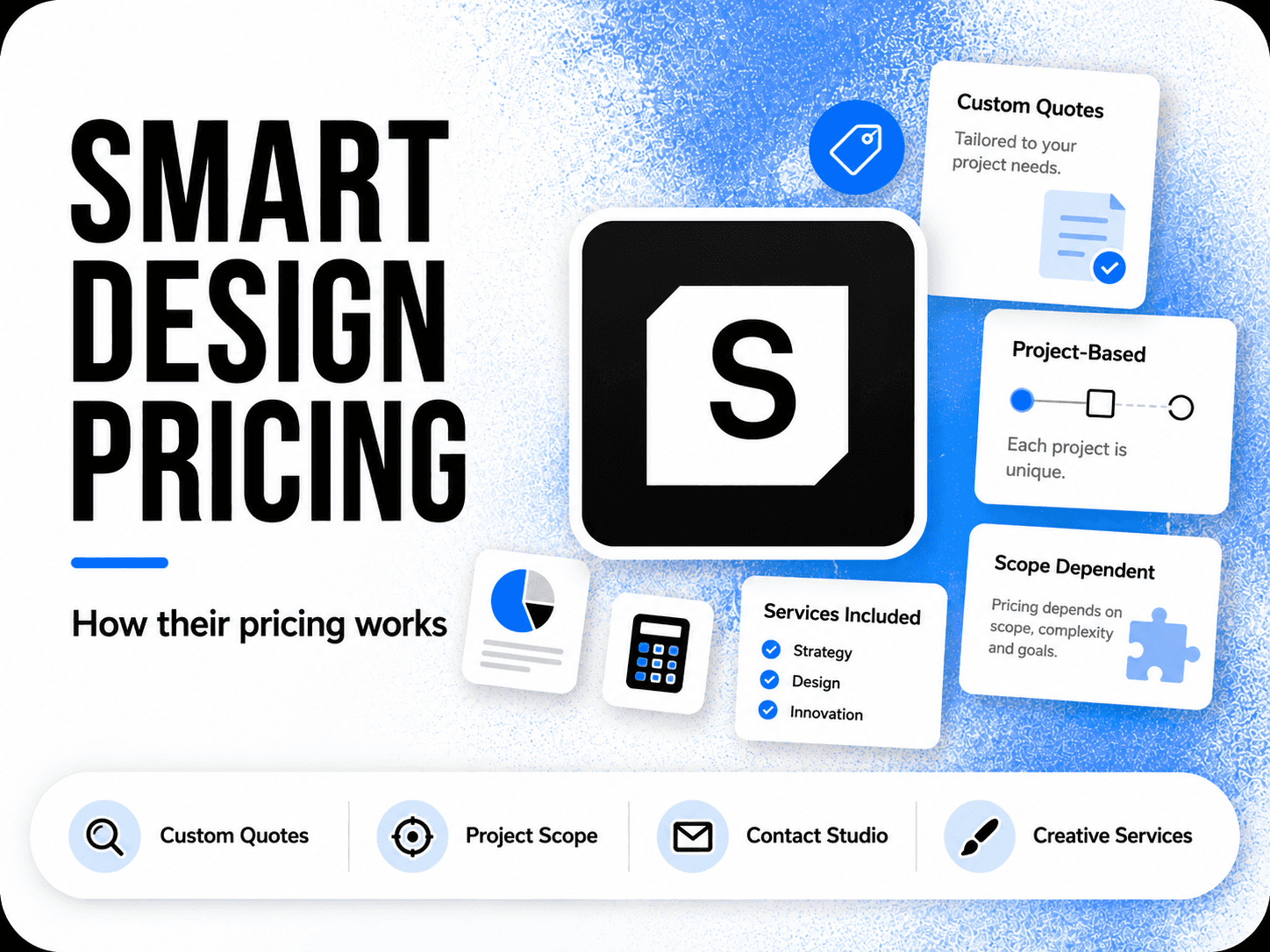
I could not treat clear public pricing as verified for Smart Design from the batch data alone. So I would describe the pricing as quote-required unless the studio confirms fixed pricing on its own website or proposal.
Last checked for this article workflow: May 17, 2026.
Package / service | Public price or signal | Notes |
Website / brand / product work | Quote required | Ask what is included, how many rounds are covered, and whether strategy is included. |
Development or implementation | Quote required | Confirm whether build, CMS setup, QA, and post-launch support are included. |
Retainer or ongoing support | Needs verification | Ask whether the studio offers ongoing support after launch. |
One-off smaller work | Needs verification | Some studios accept small projects, but others only take larger engagements. |
So no, I would not assume Smart Design is a cheap option. Most serious studios price based on scope, timeline, team seniority, technical complexity, and how much strategy is needed.
Before asking for a quote, I would prepare a short scope document with:
The project goal.
The number of pages, screens, or brand assets needed.
The launch deadline.
Whether copywriting is included.
Whether development is included.
The expected revision process.
The budget range you are comfortable with.
What Do You Actually Get?
What you get from Smart Design depends on the final scope. But based on the studio focus, a buyer should ask about these deliverables before signing.
Deliverable | Why it matters |
Research notes | User, market, stakeholder, or journey findings where included. |
Wireframes and flows | Early structure before final visual design. |
High-fidelity UI | Final screen designs for app, web app, dashboard, or platform. |
Prototype | Clickable flow or interaction model to review before build. |
Design system basics | Components, states, and visual rules to support scale. |
The most useful design projects are clear before they start. You should know what files you will receive, who owns the work, how many revisions are included, whether development is part of the scope, and what happens after launch.
If the studio cannot explain deliverables clearly, I would slow down before paying a deposit. A beautiful portfolio is helpful, but a clear process is what protects the client.
Smart Design Client Reviews and Reputation
For Smart Design, I would treat public reputation as a mix of portfolio quality, website clarity, public profiles, client proof, awards or directory mentions if available, and third-party reviews where they exist.
I would not invent a rating or review count if it is not clearly verified. That is important because many agency articles online make the mistake of turning weak signals into strong claims.
A careful buyer should look for repeated patterns in reviews, not only star ratings. The strongest positive patterns are usually:
Clear communication.
Strong visual quality.
Good project management.
Ability to understand business goals.
Reliable delivery and revisions.
Good handoff or implementation support.
Work that feels useful after launch, not only nice in a portfolio.
If public review data for Smart Design is limited, I would treat the portfolio, public case studies, and direct sales conversation as more important than review volume.
Why Smart Design May Appeal to Product-Led Teams
The reason studios like Smart Design can be attractive is that product teams often have messy problems, not just visual problems. They may need to simplify onboarding, make dashboards clearer, improve workflows, or turn an early idea into something users can understand. The risk is that product work can become expensive if the team is not clear about priorities before the project begins.
My Honest Design Opinion
My honest view is that Smart Design should be judged through the lens of fit, not only reputation.
For product design studios, I care about whether the work makes the product easier to use. Clean screens are good, but product design should reduce confusion and help users move with confidence.
For Smart Design, I would inspect recent work carefully. Look at typography, spacing, hierarchy, mobile quality, content clarity, and whether the style feels right for your brand. Some studios have a very specific taste. That taste can be perfect for one company and wrong for another.
A good studio should not only make you say 'this looks nice.' It should make you feel that the project will be easier to explain, easier to trust, and easier to ship.
Pros of Hiring Smart Design
Clear focus around product design, strategy, innovation.
Useful when product structure, UX, and interface clarity matter more than surface visuals.
Useful for buyers who want a more professional design partner than a very low-cost freelancer.
Can be a good fit when the buyer values polish, clarity, and a structured creative process.
Public website or profile makes the studio easier to evaluate before outreach.
Likely stronger than a generic vendor if the project matches the studio's stated focus.
May help companies look more credible, more modern, or more organized online.
Cons of Hiring Smart Design
Pricing may not be publicly clear, so budget fit needs to be confirmed before a call goes too far.
May not be ideal for very low-budget founders or basic one-page projects.
Product work can become expensive if the team has not prioritized what needs to be solved first.
Public review data may be limited, depending on the studio and platform visibility.
The studio's specific style may not fit every brand or industry.
Buyers should confirm who will work on the project, not only judge the studio by its best portfolio pieces.
Timeline, revision limits, handoff, and post-launch support should be clarified in writing.
These are not necessarily deal-breakers. They are the questions I would check before hiring.
Who Should Hire Smart Design?
A product-led company that needs better UX and clearer flows.
A startup building a platform, dashboard, app, or service experience.
A team that needs research, prototyping, design systems, or product strategy.
A company whose product is powerful but currently hard to understand.
A founder who wants design thinking before jumping into development.
Who Should Avoid Smart Design?
Very early founders with a tiny budget.
Buyers who only need the cheapest possible execution.
Teams that just need a pretty UI skin without product strategy or UX thinking.
Teams that are not clear on their project goals yet.
Companies that need heavy backend engineering more than design.
Clients who want unlimited revisions without a clear process.
Buyers who have not reviewed recent portfolio examples.
This does not mean Smart Design is bad. It simply means every studio has a specific best-fit buyer.
Best Smart Design Alternatives
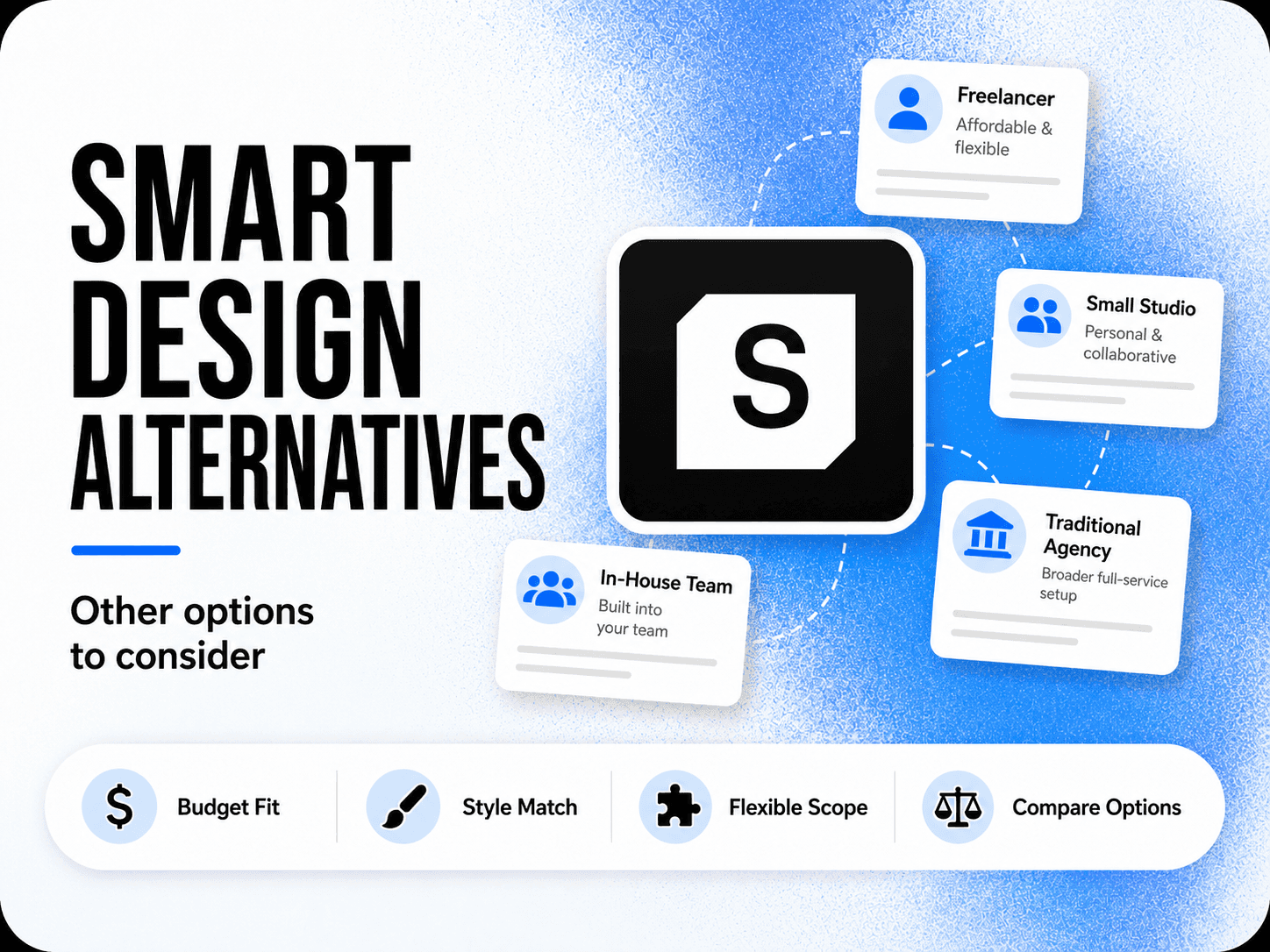
If you are comparing Smart Design alternatives, I would not only compare studio names. I would compare the type of support you actually need.
Alternative type | Best for | Why choose it instead |
Another premium studio | Funded teams that want high-end design quality. | Similar quality level, but a different style, process, or price point. |
Specialist studio | Teams with a narrow need like Webflow, brand identity, UX, or motion. | Better if your main problem is specific and you do not need a broad agency. |
Freelance designer | Early MVPs, smaller pages, and tighter budgets. | Lower cost and simpler communication, but less team capacity. |
In-house designer | Companies with constant weekly design needs. | More context and ownership over time. |
Kedara | Landing pages, websites, Figma UI, Webflow, Framer, and white-label support. | Useful when you want a leaner design/development partner. |
Some named alternatives to compare include Work & Co, MetaLab, Instrument, Clay, and Fantasy.
Disclosure Before Mentioning Kedara
Disclosure: I run a smaller design and no-code studio, so I may include Kedara as a more flexible alternative where relevant. This does not mean Smart Design is bad. The goal of this review is to help you compare options honestly.
If you like Smart Design's design-focused approach but want to compare a more flexible design and development partner, you can also check out Kedara.
Kedara works with startups, founders, and agencies on:
Landing page design
Website design
Figma UI design
Webflow development
Framer development
White-label design support
Kedara may be a better fit if you want a leaner collaboration style, custom page-by-page scope, or ongoing design/development support instead of a larger or more fixed studio engagement.
So the choice is not simply 'Smart Design vs Kedara.' The better question is: do you need the specific studio model Smart Design offers, or do you need a more flexible design and development partner?
Final Verdict: Is Smart Design Worth It?
My final view is simple: Smart Design is worth considering if you like their style, the scope matches their service focus, and the budget makes sense for your stage.
I would not treat Smart Design as the right answer for every buyer. If you only need a basic, low-cost project, you may want a freelancer or smaller studio. If you need deep strategy, research, development, or ongoing support, you should ask exactly how Smart Design handles that before signing.
Before hiring, I would check:
Recent portfolio examples.
Pricing and payment structure.
What is included in the scope.
Who will work on the project.
Revision process and timeline.
Ownership of final files and code.
Post-launch support and maintenance.
If the portfolio matches your taste and the proposal is clear, Smart Design could be a strong option. If the budget feels too high or the scope feels too rigid, compare smaller studios, specialists, or Kedara before making a final decision.
FAQ
Is Smart Design legit?
Yes, Smart Design has a public website or profile and a clear service focus. Buyers should still verify recent work, pricing, and scope directly before hiring.
How much does Smart Design cost?
I could not treat fixed public pricing as verified for this article. You should contact Smart Design directly for current pricing and ask what is included.
What services does Smart Design offer?
Smart Design is connected to product design, strategy, innovation. Exact deliverables should be confirmed before signing.
Is Smart Design good for startups?
It can be, especially if the studio's style and service focus match the startup's current stage, budget, and launch goals.
Who should hire Smart Design?
Hire Smart Design if you have a clear scope, care about professional design quality, and believe their portfolio matches your business.
Who should avoid Smart Design?
Avoid Smart Design if your budget is very low, your scope is unclear, or you only need the cheapest possible execution.
What are the best Smart Design alternatives?
The best alternatives depend on your need. Compare premium studios, specialist Webflow/Framer partners, freelance designers, in-house designers, and Kedara.
Sources / References
Source note: Pricing, ratings, package details, and public claims can change over time. Always verify directly with the studio before making a hiring decision.

