Design Studio Review
Saint-Urbain Review 2026: Pricing, Services, Pros, Cons & Is It Worth Hiring?
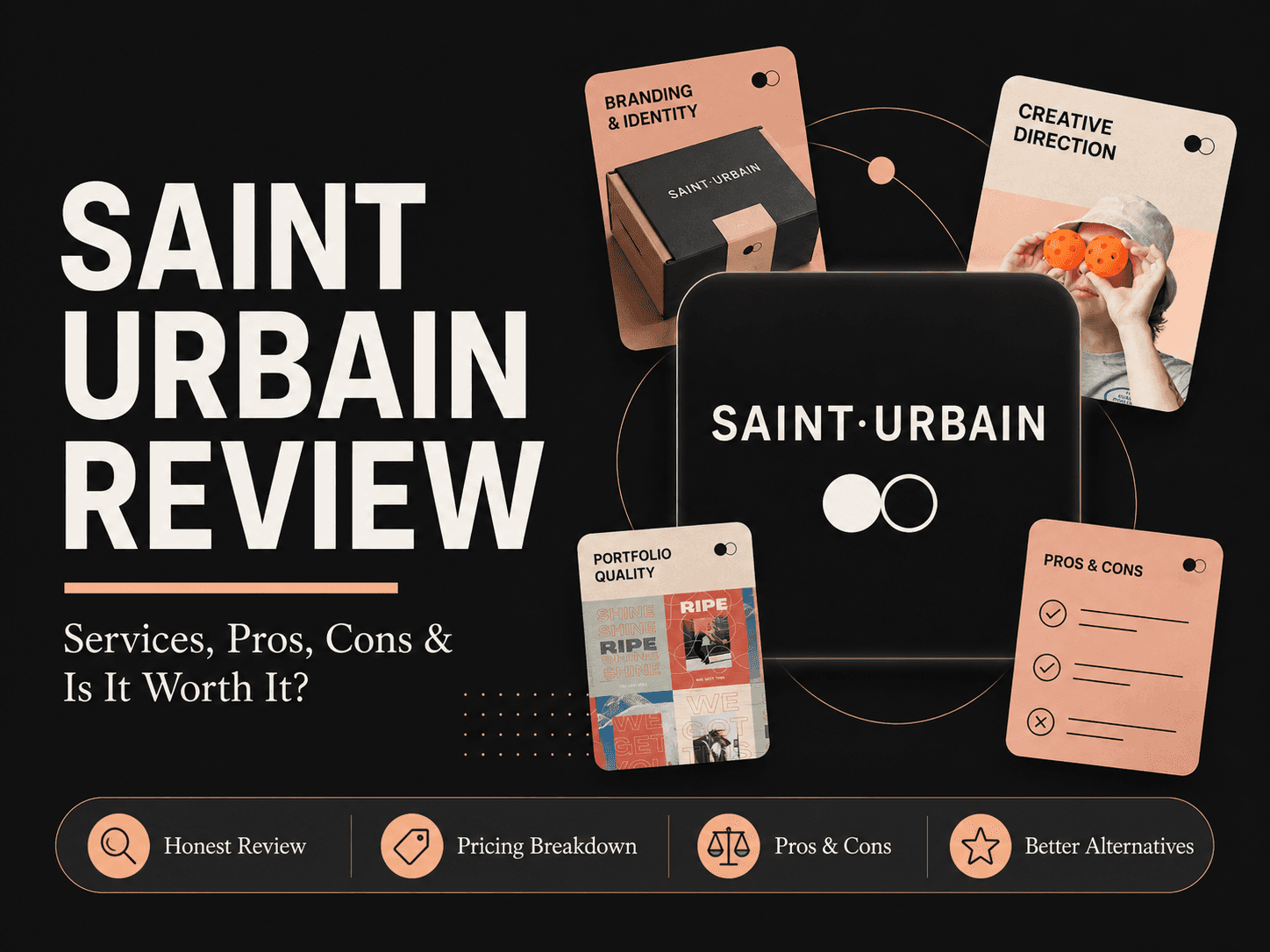
Read this Saint-Urbain review covering pricing, services, client reviews, pros, cons, alternatives, and whether Saint-Urbain is worth hiring for consumer and hospitality branding.
Limited Monthly Offer
Unlimited Requests
Design + Development
Animations Included
Fixed Monthly Price
Introduction
If you are searching for a Saint-Urbain review, you are probably not looking for a basic company profile.
You are probably asking one simple question: Should I hire Saint-Urbain or not?
That is what I want to help you decide in this article.
My honest view is this: Saint-Urbain is worth considering if you want playful but polished branding for hospitality, food, culture, and consumer brands. But I would not say it is the best fit for everyone.
Saint-Urbain has a clear public presence, a visible portfolio or service positioning, and enough public proof to review seriously. At the same time, buyers still need to check pricing, scope, team fit, timeline, and whether the studio's style matches their business goal. On Saint-Urbain's official website, the studio positions itself around consumer and hospitality branding and related digital or brand work, which gives us a useful starting point for this review.
So let us break down Saint-Urbain's pricing, services, reviews, pros, cons, and alternatives clearly.
Quick Verdict: Is Saint-Urbain Worth Hiring?
Quick verdict: Yes, Saint-Urbain is worth considering if you need restaurants, packaged goods, hospitality brands, cultural projects, and companies that need identity with personality. It is best for buyers who value design quality, strategic clarity, and a studio process that goes deeper than basic production. But it may not be ideal if enterprise SaaS companies that need deep product UX or technical platform development.
Question | Quick answer |
Is Saint-Urbain legit? | Yes, based on its public website, visible portfolio/service positioning, and supporting public profile or industry signals. |
Best for | Restaurants, packaged goods, hospitality brands, cultural projects, and companies that need identity with personality. |
Not best for | Enterprise saas companies that need deep product ux or technical platform development. |
Pricing signal | No simple public fixed-price package was verified. Treat pricing as quote-based unless the studio states otherwise. |
Main risk | The main risk is fit: buyers should confirm scope, seniority, review process, delivery expectations, and how much strategy is included before signing. |
My simple take: Saint-Urbain can be a strong option for the right buyer, but I would not hire casually. Before committing, you should understand what kind of work they are best at, how they price projects, what deliverables are included, and whether their style is right for your audience.
How I Reviewed Saint-Urbain
I reviewed Saint-Urbain based on public research and professional design analysis. I looked at the studio's website, service language, portfolio signals, supporting public profiles, pricing visibility, reputation indicators, buyer fit, and possible risks for different types of clients.
I have not personally hired Saint-Urbain. So this review is based on public information, not private client experience.
Criteria | Score | My view |
Service clarity | 7.5/10 | Saint-Urbain communicates a clear design direction, but buyers should still confirm the exact project scope. |
Pricing clarity | 5.5/10 | Pricing is mostly quote-based or not publicly fixed, which is normal for studios but less convenient for buyers. |
Visual/design quality | 8/10 | The public positioning and portfolio signals suggest a strong visual or strategic design standard. |
Public reputation | 6.5/10 | There are useful public signals, but the depth of third-party review data varies by studio. |
Budget accessibility | 5.5/10 | Likely more suitable for serious projects than very small, low-budget tasks. |
Buyer fit | 7.5/10 | Strong fit for restaurants, packaged goods, hospitality brands, cultural projects, and companies that need identity with personality, weaker for enterprise SaaS companies that need deep product UX or technical platform development. |
The goal here is not to fake precision. The goal is to give a useful buyer-focused view. When public data is limited, I will say it clearly.
What Is Saint-Urbain?
Saint-Urbain is a design studio or creative agency focused on consumer and hospitality branding.
Instead of looking at Saint-Urbain as a generic agency, it is more useful to understand the kind of buying problem it solves. The studio is most relevant when a company needs design to clarify its position, improve trust, build a more memorable brand, or create a stronger digital experience.
If I had to explain Saint-Urbain simply, I would say: Saint-Urbain helps organizations turn design into a clearer, more useful business asset. That may mean a brand system, a website, a product interface, a campaign, or a more complete digital presence depending on the project.
That is also why the buyer fit matters so much. A studio like Saint-Urbain can be valuable when design is tied to growth, positioning, communication, or product experience. But it can feel like too much if you only need a very basic execution task.
Is Saint-Urbain Legit?
Yes, from what I could verify publicly, Saint-Urbain appears to be a legitimate studio.
The main trust signals are the active official website, public service or portfolio pages, and supporting public information such as Saint-Urbain work page. These signals do not guarantee the studio is the right fit for every buyer, but they do show that the studio has a public footprint worth evaluating.
So I would not frame the question as: Is Saint-Urbain real?
The better question is: Is Saint-Urbain the right fit for your project, budget, timeline, and expectations?
That answer depends on what you need, how much strategic support you expect, and whether the studio has recent work that looks close to the outcome you want.
Saint-Urbain Services Explained
Saint-Urbain appears most relevant for buyers who need a connected design partner rather than a tiny one-off task. The specific scope will vary, but the core service areas can be understood like this:
Service | What it means for the client |
Brand identity | Useful when the client needs brand identity connected to the larger brand, website, or product goal. |
Logo design | Useful when the client needs logo design connected to the larger brand, website, or product goal. |
Packaging | Useful when the client needs packaging connected to the larger brand, website, or product goal. |
Copywriting | Useful when the client needs copywriting connected to the larger brand, website, or product goal. |
Illustration and merch | Useful when the client needs illustration and merch connected to the larger brand, website, or product goal. |
Websites and digital marketing | Useful when the client needs websites and digital marketing connected to the larger brand, website, or product goal. |
This makes Saint-Urbain useful for companies with design needs that cross more than one surface. For example, a brand may need positioning, visual identity, a website, campaign assets, and a launch system. A product team may need UX clarity, interface design, design systems, and a marketing site that matches the product.
The main thing to remember is that a service list is not the same as a project scope. Before hiring, ask exactly what is included and what is not included.
Saint-Urbain Pricing
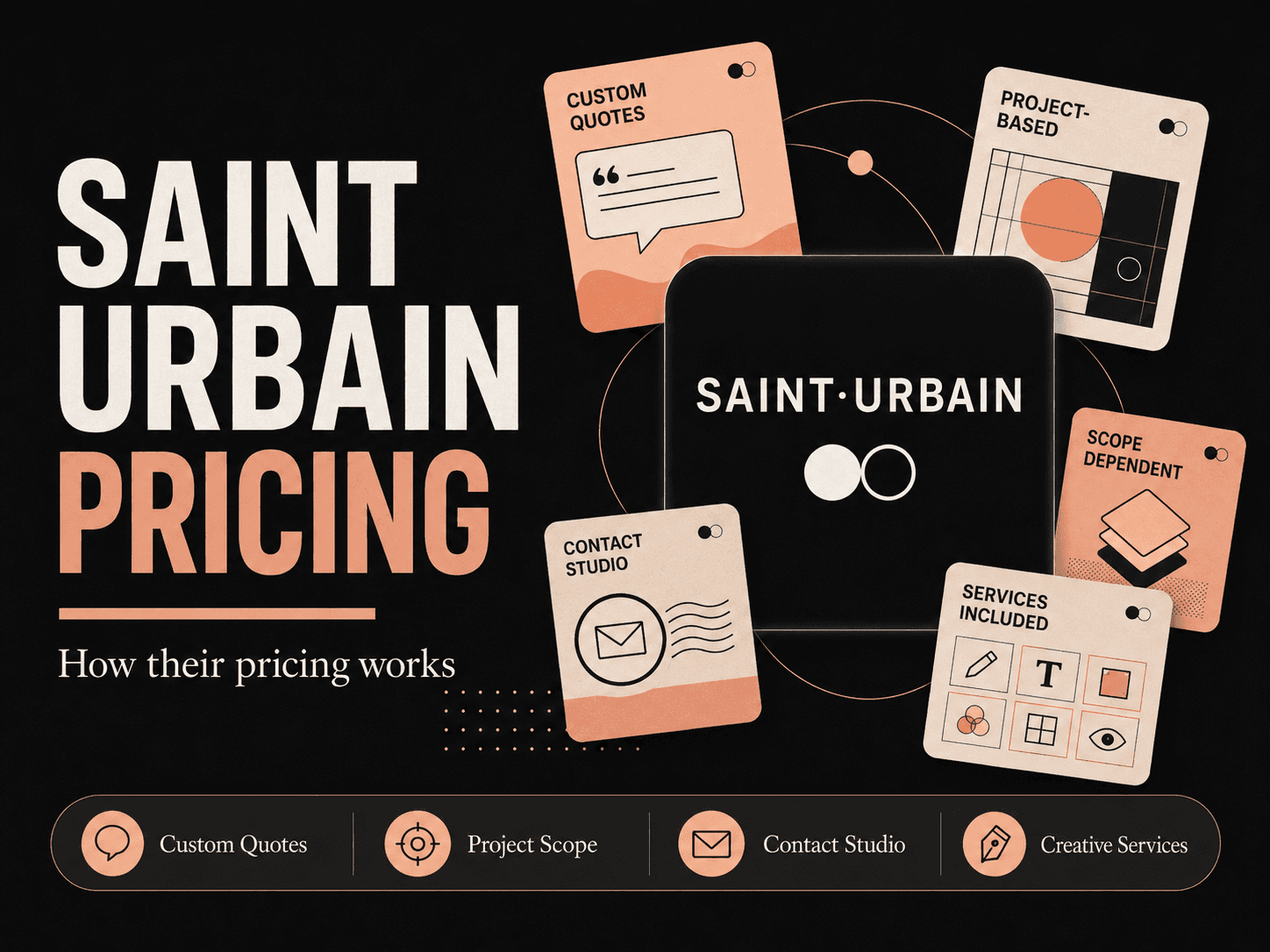
Saint-Urbain does not appear to publish a simple universal pricing table for every project type.
That means pricing is likely custom and depends on the project scope, the seniority of the team, the number of deliverables, the timeline, and whether the work includes strategy, design, development, content, or ongoing support.
Last checked: June 6, 2026.
Pricing area | What to ask before hiring |
Minimum project size | Ask whether the studio has a minimum engagement size and what kind of project fits that minimum. |
Strategy and discovery | Ask whether research, workshops, positioning, or planning are included in the quote. |
Design deliverables | Ask whether you receive Figma files, brand guidelines, design systems, content assets, or final production files. |
Development | Ask whether website build, Webflow, Shopify, frontend, or engineering is included or separate. |
Revisions and timeline | Ask how revisions work, how feedback is handled, and what the realistic timeline looks like. |
So no, Saint-Urbain is probably not the best option if you want the cheapest possible design support. But if the project has real business value, custom pricing can make sense because the work is shaped around the actual problem.
My advice is simple: do not ask only, 'How much does a website cost?' Ask what the quote includes, what it excludes, who is doing the work, and how the studio measures success.
What Do You Actually Get?
What you get from Saint-Urbain depends on the scope, but most serious design studio projects usually include a mix of thinking, design, production, and refinement.
Feature / deliverable | Included? | Notes |
Discovery or intake | Usually | Useful for understanding goals, audience, constraints, and success criteria. |
Strategy or direction | Depends on scope | Important if the project needs more than visual execution. |
Visual design | Yes | Core deliverable for most branding, website, campaign, or product work. |
Prototype or concept | Often | Helps the client understand direction before full production. |
Development or implementation | Depends on studio/scope | Must be confirmed before signing. |
Source files and handoff | Depends on scope | Ask what files, guidelines, and assets you keep after the project. |
Post-launch support | Sometimes | Ask if launch support, fixes, or ongoing updates are included. |
The most important part is the handoff. A beautiful design is less useful if your team cannot use, update, or extend it after the project ends.
Before hiring, I would ask:
Can I see recent work similar to my project?
What exactly is included in the first phase?
Who will be on the project team?
How many concepts and revision rounds are included?
Will I receive editable source files?
Is implementation included or only design?
What happens after launch?
Saint-Urbain Client Reviews and Reputation
This is where I would be careful and balanced.
Saint-Urbain has public signals that support its credibility, but the amount of review-platform data may not be as deep as a large agency with hundreds of verified reviews. That does not automatically make the studio weak. It just means buyers should rely on a mix of signals instead of one metric.
A useful extra public reference for evaluating the studio is Saint-Urbain about page, because it gives more context beyond the homepage.
For a buyer, I would evaluate reputation through:
Recent portfolio quality
Relevant case studies
Client names or project types
Public interviews or profiles
Third-party review pages where available
How clearly the studio explains process and scope
The quality of the first sales or discovery conversation
The balanced view is this: public reputation matters, but fit matters more. A famous studio can still be wrong for your project, while a smaller studio can be excellent if the scope and style match.
Why Saint-Urbain May Be Worth Considering
The main reason to consider Saint-Urbain is that the studio appears to have a clear design point of view. That matters because many agencies can produce clean work, but fewer can create work that feels specific, useful, and connected to the business goal.
For a buyer, the value is not just the final visual output. The value is the thinking behind the output: what should be emphasized, what should be simplified, what should feel premium, and what should be removed because it creates noise.
This is especially important for consumer and hospitality branding projects, where a weak design system can make the company look less mature than it really is.
My Honest Design Opinion
My honest design opinion is that Saint-Urbain is strongest when the client values design as part of the business strategy, not just decoration.
A lot of teams hire a studio because they want something to look better. That is understandable, but the best studio work usually goes further. It improves clarity. It helps the audience understand faster. It makes the brand easier to trust. It gives the company a system that can grow.
That is the lens I would use when evaluating Saint-Urbain. Do not only ask whether the work looks good. Ask whether it would help your specific audience understand, believe, and act.
If the answer is yes, then the studio may be worth a serious conversation. If the project is very small, unclear, or mostly execution-based, you may want to compare simpler options first.
Pros of Hiring Saint-Urbain
Clear fit for consumer and hospitality branding projects.
Public website and visible portfolio or service positioning.
Likely stronger for custom work than template-based execution.
Useful when design quality affects trust, positioning, or launch impact.
Can help buyers think beyond one isolated asset and toward a more complete system.
May be a better fit than a freelancer when the project needs more structure and direction.
Cons of Hiring Saint-Urbain
Pricing is not always public, so you need a custom quote.
May be too expensive or too involved for very small projects.
Public review depth may be limited compared with larger review-heavy agencies.
Buyers need to confirm whether strategy, copywriting, and development are included.
A strong studio style can be a benefit, but only if it matches your brand and audience.
It may not be the right fit if your main need is pure CRO, paid ads, or backend engineering.
Who Should Hire Saint-Urbain?
Saint-Urbain may be a good fit if:
You need restaurants, packaged goods, hospitality brands, cultural projects, and companies that need identity with personality.
You care about design quality and not just fast production.
You want a studio that can bring taste, structure, and outside perspective.
You have enough budget for a serious custom design engagement.
You can clearly explain your business goal before the project starts.
You want work that feels more considered than a basic template or quick freelancer job.
Who Should Avoid Saint-Urbain?
Saint-Urbain may not be the best fit if:
Enterprise saas companies that need deep product ux or technical platform development.
Your budget is very low.
You only need one very simple page.
You are not ready to define goals, audience, and content.
You need a full internal team replacement with multiple specialists working in parallel.
You want guaranteed fixed pricing before discussing scope.
This does not mean Saint-Urbain is bad. It just means every design studio has a specific fit.
Best Saint-Urbain Alternatives
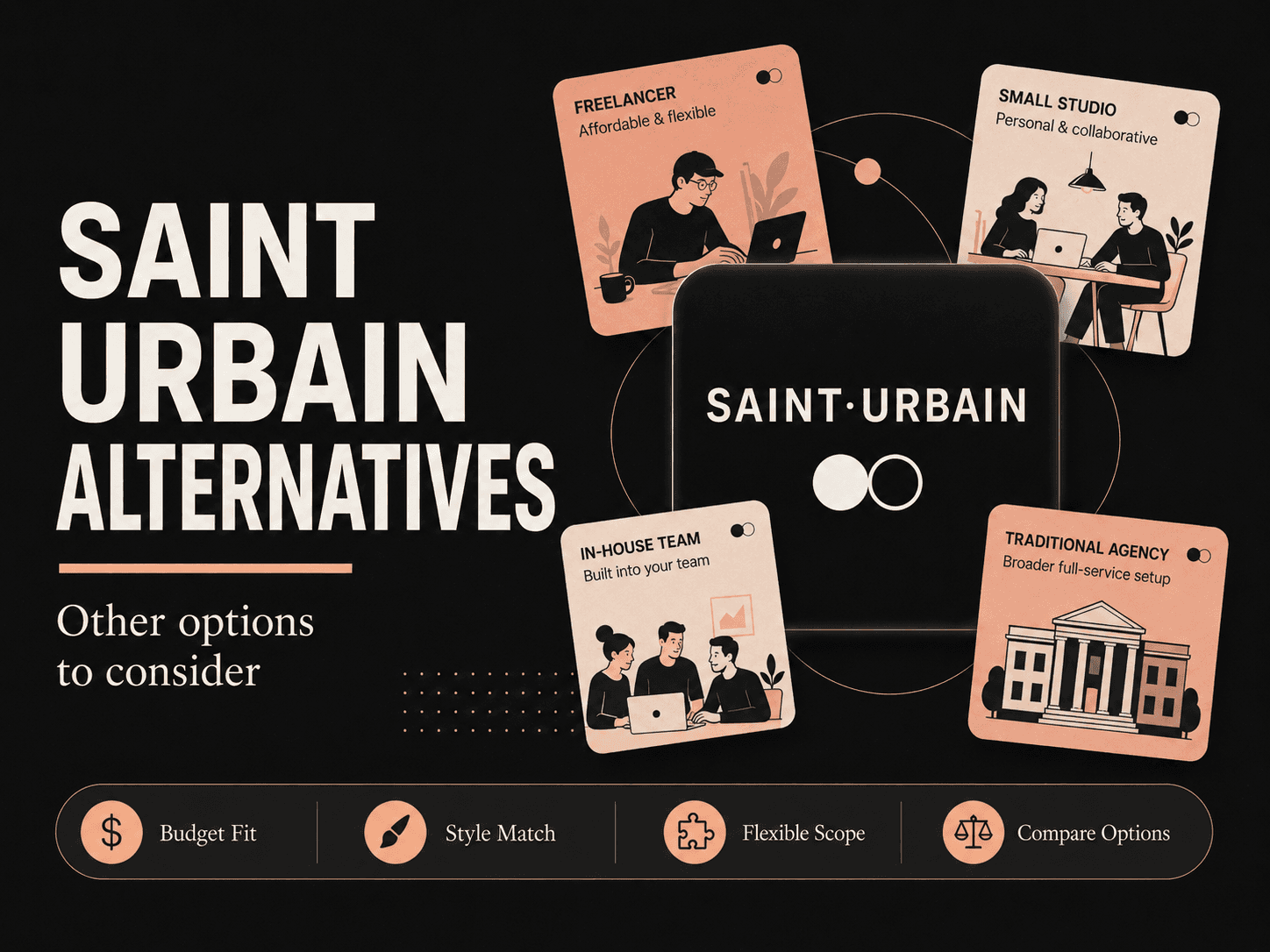
If you are comparing Saint-Urbain alternatives, I would not only compare names. I would compare the type of support you actually need.
Alternative type | Best for | Why choose it instead |
Smaller design studio | Landing pages, websites, identity, and focused digital systems. | More flexible and often more affordable than a larger studio. |
Freelance designer | Early MVPs, simple websites, and smaller design tasks. | Lower cost and direct communication. |
Traditional agency | Larger companies that need workshops, strategy, and full-team support. | Better for complex projects with many stakeholders. |
Product design studio | Apps, dashboards, UX flows, and interface systems. | Better if the product experience is the main problem. |
Webflow/Framer specialist | Teams that already have designs and need development. | Better if the main need is clean build execution. |
In-house designer | Companies with daily product/design needs. | More internal context and long-term ownership. |
Some named alternatives to compare include Koto, Collins, Gretel, Pentagram, and How&How. These are not all the same kind of studio, so the best choice depends on whether you need branding, product UX, web design, ecommerce, motion, or a more flexible design partner.
Disclosure Before Mentioning Kedara
Disclosure: I run a smaller design and no-code studio, so I may include Kedara as a more flexible alternative where relevant. This does not mean Saint-Urbain is bad. The goal of this review is to help you compare options honestly.
If you like Saint-Urbain's design-focused approach but want to compare a more flexible design and development partner, you can also check out Kedara.
Kedara works with startups, founders, and agencies on:
Landing page design
Website design
Figma UI design
Webflow development
Framer development
White-label design support
Kedara may be a better fit if you want a leaner collaboration style, custom page-by-page scope, or ongoing design/development support instead of a large fixed agency engagement.
So the choice is not simply "Saint-Urbain vs Kedara." The better question is: Do you need a specialized studio with its own process and positioning, or do you need a flexible design and no-code partner for websites, landing pages, Framer, Webflow, and Figma execution?
Final Verdict: Is Saint-Urbain Worth It?
My final view is simple.
Saint-Urbain is worth considering if you like the studio's public work, have a serious design need, and want help with consumer and hospitality branding rather than a basic production task.
It has enough public presence and positioning to be worth a buyer's attention. But I would not say it is automatically right for everyone.
Before hiring, I would check:
Recent portfolio examples
Whether your project type fits their strengths
What is included in the first phase
Pricing and minimum engagement size
Who will work on the project
Whether development, copywriting, or implementation are included
Revision process and timeline
Whether the final output will be easy for your team to maintain
If the portfolio matches your taste and the project value justifies the budget, Saint-Urbain can be a strong option. If the budget feels too high or the scope is too simple, compare smaller studios, freelancers, specialists, or Kedara before making a final decision.
FAQ
Is Saint-Urbain legit?
Yes, Saint-Urbain appears legitimate based on its public website and supporting public profile or portfolio signals. Buyers should still verify recent work and scope fit before hiring.
How much does Saint-Urbain cost?
Saint-Urbain does not appear to publish universal fixed pricing for every project. Pricing should be confirmed directly based on scope, timeline, and deliverables.
What services does Saint-Urbain offer?
Saint-Urbain is most relevant for brand identity, logo design, packaging, copywriting and related design work.
Is Saint-Urbain good for startups?
It can be, especially if the startup has a serious brand, website, product, or launch need. Very early founders with tiny budgets may need a leaner option first.
Who should hire Saint-Urbain?
Companies that need restaurants, packaged goods, hospitality brands, cultural projects, and companies that need identity with personality should consider Saint-Urbain.
Who should avoid Saint-Urbain?
Buyers who need enterprise SaaS companies that need deep product UX or technical platform development may want to compare other options.
What are the best Saint-Urbain alternatives?
The best alternatives depend on your need. Compare brand studios, product design studios, Webflow/Framer specialists, freelancers, traditional agencies, and smaller no-code studios like Kedara.
Sources / References
Source note: Pricing, ratings, package details, review counts, and public claims can change over time. Always verify directly with the studio before making a hiring decision.

